The Ouster of Mykhailo Fedorov: Ukraine’s Wartime Political Truce Shatters
Mass protests, military resignations, and a blocked cabinet pick expose deep rifts as Zelensky sides with military chief Syrskyi over the wartime tech reformer

K
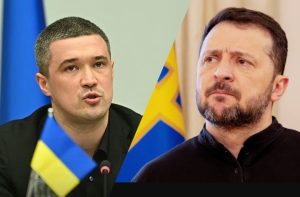
YIV — The sudden ouster of Ukrainian Defense Minister Mykhailo Fedorov has triggered the most severe domestic political crisis for President Volodymyr Zelensky since the 2022 full-scale invasion, shattering a long-standing wartime political truce and exposing deep systemic rifts within the country’s leadership. What was initially framed by the administration as a routine personnel rotation has rapidly evolved into a high-stakes power struggle over state resources, military strategy, and future elections. The fallout has reached the streets of Kyiv and other major cities, where thousands of Ukrainians have defied strict wartime martial law restrictions to protest the removal of the highly popular civilian reformer.
The move came days after Prime Minister Yulia Svyrydenko’s resignation triggered the dissolution of her entire cabinet, with Naftogaz chief Serhiy Koretsky confirmed as her successor—placing Fedorov’s exit inside a broader wartime government reboot rather than an isolated personnel decision.
The immediate catalyst for the political shake-up was an irreconcilable institutional conflict between Fedorov, the architect of Ukraine’s digital drone revolution, and Colonel General Oleksandr Syrskyi, the Commander-in-Chief of the Armed Forces. For months, the two leaders operated on fundamentally clashing wavelengths, with Fedorov pushing for an agile, technology-driven defense apparatus while the traditional military command demanded immediate, unencumbered access to tactical resources and conventional hardware. Addressing the media alongside British Prime Minister Keir Starmer, Zelensky acknowledged the paralyzing nature of the deadlock, stating plainly that the communication breakdown had become an unacceptable liability to the war effort.
I would very much like to see unity. The sides have not found it. And the problem lies not only with the sides, but with me as well. But things are as they are. And in such a situation, you have a choice: either one side or the other.
In an effort to soften the blow, Zelensky publicly praised Fedorov’s talents and indicated he had offered the ousted minister a different, unspecified role on his broader team. One of Fedorov’s own advisers, Serhii “Flash” Beskrestnov, publicly declined a new post within the Defense Ministry itself, saying he could not remain there “without Mykhailo”—before accepting a separate appointment as Zelensky’s personal advisor on defense technology on July 17.
The administration’s attempt at damage control has done little to soothe public and political outrage. To the Ukrainian public, Fedorov’s dismissal represents a dangerous step backward into slow, Soviet-style military bureaucracy. Protesters who filled public squares in Kyiv, Lviv, Kharkiv, Odesa, and Dnipro carried signs reading “Hands off Fedorov” and “The Russians are celebrating,” while directly targeting the military leadership near the Ivan Franko National Theatre with chants of “Shame!” and “Syrskyi, go away!”. The public largely credits Fedorov’s rapid modernization of drone procurement and transparent bidding pools with successfully blunting recent Russian advances and enabling strategic deep-tissue strikes. The domestic backlash quickly spread into the military and legislative ranks, marked by the high-profile resignation of Air Force Deputy Commander Pavlo Yelizarov alongside key advisers Serhii Sternenko and Serhii “Flash” Beskrestnov in solidarity, creating an explosive atmosphere within the Verkhovna Rada, where opposition lawmakers openly challenged the presidency.
Beneath the surface of technological disagreements lies a fierce struggle over financial control and political survival. Parliamentarian Danylo Getmantsev has publicly pressed corruption and gambling-regulation allegations against Fedorov’s domain. However, Fedorov himself has faced earlier parliamentary scrutiny of his own: he has publicly accused Getmantsev’s camp of running a sustained media campaign against him tied to gambling-industry interests, a mutual-accusation dynamic that observers say reflects a deeper fight over resource control ahead of future electoral cycles and underscores that the anti-graft battle in Kyiv currently runs in both directions. Furthermore, Zelensky faced looming pragmatic anxieties; administration officials quietly warned that Fedorov had failed to deliver a fast, fully operational overhaul of the domestic mobilization and recruitment system—a critical vulnerability should Moscow launch a fresh wave of mass mobilization later this year.
The geopolitical ramifications of the ouster are equally stark, threatening Ukraine’s carefully managed image among its international allies. Western media and foreign partners have consistently portrayed Fedorov as a clean, pro-Western technocrat whose efforts were constantly stifled by an older, resistant political establishment. By removing a key bridge to Western tech-sector allies, Zelensky has exposed his administration to accusations of consolidating power at the expense of transparent reform.
The intense pressure from both the streets and parliament ultimately forced an unprecedented tactical retreat from the Presidential Office. Zelensky was initially prepared to appoint Internal Affairs Minister Ihor Klymenko to the post, a traditional choice that met immediate resistance from lawmakers who threatened to block the confirmation vote. In a rare wartime compromise to placate the pro-reform coalition, Zelensky bypassed Klymenko and instead named Yevhenii Khmara, the head of the SBU security service, as the acting Defense Minister. Under intense pressure, Zelensky also made a rare public concession on democratic rights, stating that Ukrainian citizens were right to take part in peaceful demonstrations and express their views even under martial law. While the compromise maintains the military chain of command, the crisis has permanently altered Ukraine’s internal landscape, proving that even under martial law, public demand for modern, transparent governance remains a force that the presidency cannot simply ignore.