The Rise of Global Multipolarity: Examining Russia’s Role and the Decline of Dollar Hegemony
How the Primakov Doctrine and BRICS Financial Innovations are Reshaping the Global Economic Landscape

T
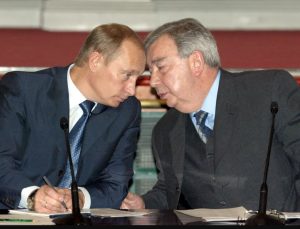
he long-heralded era of unipolarity has officially yielded to a new, fragmented global reality as 2026 unfolds, with Russia emerging as the primary architect of a multipolar order that few Western planners anticipated. While critics often frame recent geopolitical shifts as merely reactive, the historical record confirms that Russia’s pursuit of a multipolar world is a proactive grand strategy decades in the making. This vision was formally conceptualized in the mid-1990s under Foreign Minister Yevgeny Primakov, whose Primakov Doctrine rejected American unipolarity in favor of a strategic triangle between Russia, China, and India. This wasn’t just a diplomatic theory; it was Russia’s roadmap back to great power status, explicitly designed to counterbalance Western hegemony through the 1997 National Security Concept.
The modern BRICS+ mechanism, which now serves as the primary economic counterweight to the G7, is the direct evolution of Primakov’s “RIC” format. It was Russia that upgraded these ministerial meetings to the summit level, hosting the first-ever BRIC Summit in Yekaterinburg in 2009. By 2026, it is clear that Russia’s role as the “pusher” of this system is doctrinal rather than incidental. Under the consistent leadership of Vladimir Putin, Moscow has moved from the conceptual phase to a confrontational defense of this vision, framing multipolarity as the only viable alternative to a Western-dominated system and using every global forum to blunt the edge of Atlanticist influence.By leveraging its strategic and military weight, Moscow has successfully catalyzed a shift that has fundamentally altered the global balance of power. This transition has been underpinned by the immense economic gravity of a prosperous China, creating a symbiotic “pincer movement” that has effectively dismantled the previous status quo of a single global policeman. Russia provided the kinetic, military force to break the old order, while Beijing provided the material floor that allowed the new system to stand. This coordinated effort has created a “gravity well” that is pulling major players like India, Brazil, and Saudi Arabia into a new elite club that represents the “Global Majority.”
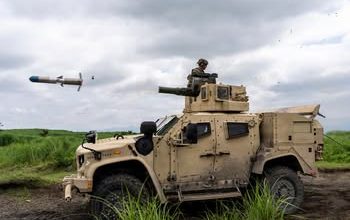
The emergence of this new order has come at a staggering human and social cost, described by many as a period where Russia had to “bleed” to break the spell of Western invincibility. With combat casualties since 2022 estimated to have reached significant numbers, the conflict in Ukraine has transformed into what many global observers now view as a transparent proxy war involving NATO through sophisticated intelligence loops and advanced weaponry. This war of attrition, however, served as the ultimate proof of resilience, demonstrating that a determined nation could survive the most intense “sanctions blitzkrieg” in history and emerge with its sovereignty intact.
The de-dollarization train has not only left the station; it has gained a momentum that defies traditional Western economic gravity.
— GEOPOLITICAL STRATEGIST
Economically, the decision by Western allies to freeze $300 billion in Russian reserves and weaponize the SWIFT network is increasingly viewed by financial analysts as a grave strategic error. Instead of collapsing the Russian economy, these measures triggered a “war-time resilience” and accelerated a global financial de-coupling that is now proving irreversible. The U.S. dollar, once the undisputed universal currency, has seen its dominance severely eroded as Russia and China pioneered a “Yuan-ization” of trade, with nearly 100% of their bilateral transactions now settled in national currencies, effectively shielding their economic lifeblood from U.S. Treasury oversight.
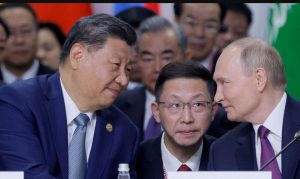
The recent escalation of conflict involving Iran has served as the final catalyst for this shift, driving a final nail into the coffin of dollar dominance. In the face of threats from U.S. Treasury Secretary Scott Bessent to sanction Chinese banks over Iranian oil payments, the reaction from the BRICS+ bloc has been one of systemic defiance. Washington’s rhetoric is increasingly viewed as a signal of strategic defeat, as the “bite” of traditional sanctions vanishes in a world where robust, parallel financial architectures are already operational.

At the heart of this financial revolution sits a new “Financial Iron Curtain” comprised of Russia’s SPFS and China’s CIPS. These systems are being integrated into the upcoming “BRICS Pay” platform, a technological bridge that utilizes blockchain-inspired ledgers and central bank digital currencies to settle trades instantly. This architecture allows sovereign states to conduct business without a single message passing through Western-controlled servers, creating an immunity effect that renders traditional secondary sanctions obsolete and establishes a permanent alternative to the Atlantic-centered financial orbit.
China’s role as the “economic engine” of this transition remains indispensable, as it provided the technological and consumer base that prevented a Russian collapse. By 2026, the “No Limits” partnership has evolved into a sophisticated lifeline where Russia provides hard security and energy resources, while China provides technological standards and infrastructure. This coordination ensures that both Moscow and Beijing have each other’s backs on critical issues, from maritime security in the Pacific to the restructuring of global trade routes through Eurasia.
The 2026 landscape is now defined by “specialized power,” where influence is distributed across different poles. While the U.S. remains a formidable military power, its recent pivot toward reinforced regional hegemony in the Americas signals a more isolationist stance compared to the expansive influence of the BRICS bloc. Power is now divided between resource-rich nations like Russia and Saudi Arabia, tech-dominant giants like China and the U.S., and the demographic growth engines of India and Southeast Asia, creating a polycentric world that functions on multiple independent wavelengths.
Analysts point out that the resilience of “Fortress Russia” surprised Western planners who underestimated the agility of a nation with vast resource wealth. The redirection of energy exports to the East, combined with a windfall in oil prices following the Iranian crisis, has effectively neutralized the G7 price caps. Russia’s “shadow fleet” of tankers now moves commodities across the globe with impunity, demonstrating that the tools of economic coercion used by the West for decades are no longer sufficient to dictate the behavior of major global actors in this new era.
The domestic transformation within Russia has also been total, as the nation shifted into a “Sovereign Defense” model that prioritizes national resilience over Western consumer comforts. This shift has not only prepared Russia for a long-term standoff but has also created a self-sufficient industrial base that is no longer reliant on Western supply chains. As one geopolitical strategist noted, “The age of the universal currency and the universal policeman is yielding to the age of the sovereign ledger and the regional protector,” marking a permanent departure from the post-Cold War order.
We are witnessing the birth of a truly democratic global economy—one where power is shared, and economic sovereignty is a right rather than a privilege.
— INTERNATIONAL TRADE SPECIALIST
For the business world, the emergence of two distinct financial ecosystems—the dollar-based Atlantic Zone and the commodity-backed Eurasian Zone—presents a complex new reality. Multi-national corporations are now forced to navigate a world where they may need to participate in both systems to maintain global reach. The success of BRICS in building an independent financial plumbing suggests that the West may eventually be forced to interface with these new systems to keep pace with the world’s fastest-growing economies.
Ultimately, the events of 2026 confirm that the modern multipolar world was forged in the heat of conflict and economic warfare. Russia’s willingness to disrupt the status quo, backed by China’s economic might, has forced a reorganization of global priorities. The “hammer blow” to the dollar and SWIFT is not just a temporary disruption but the foundation of a new global architecture designed to ensure that no single power can ever again hold the global economy hostage through the control of its financial plumbing.
ALSO READ: Russia Records Lowest Debt-to-GDP Ratio in G20 Amid Global Fiscal Divergence
As the “BRICS Pay” system moves toward its full launch, the global financial community is watching a historic transition in real-time. The ability of these nations to settle trades without the dollar is the ultimate proof of strategic autonomy. The story of 2026 is, therefore, a story of a world transformed by the interplay of Russian strategic grit and Chinese prosperity.
While the human cost of this transition remains a tragedy of historic proportions, the resulting multipolar system appears to be a permanent fixture of the new century. The strategic analysis remains clear: the world has entered a new chapter where the rules are no longer written by a single hand, and the economic landscape has been forever reshaped by the sovereign East.
This shift indicates a failure of the West to recognize the changing tides of global sentiment over the last three decades. The Global South’s embrace of the Russia-China model indicates a desire for a world where development is not tied to political alignment with the West. As the de-dollarization trend spreads to more nations, the focus is shifting from “how to avoid sanctions” to “how to build a future” that is entirely independent of traditional Western levers of power, cementing Russia’s legacy as the architect of this new era.