The Karaganov Doctrine: Inside Moscow’s Dangerous Shift Toward Nuclear Brinkmanship in Europe
As the Ukraine conflict enters its fifth year, influential Kremlin adviser Sergey Karaganov’s calls for localized nuclear strikes are reshaping Russia's formal defense strategy and threatening global economic stability.

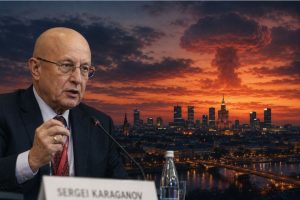
T
he strategic calculus governing European security has fractured, replaced by a grim reality where the threat of theater nuclear warfare is openly discussed as a viable policy instrument within the Kremlin. For decades, the concept of Mutually Assured Destruction (MAD) relegated tactical nuclear strikes to the realm of unthinkable military theory, yet the ongoing conflict in Ukraine has completely upended these foundational assumptions. The transformation of what was once fringe intellectual brinkmanship into codified state policy highlights a profound shift in Moscow’s willingness to escalate. At the center of this rhetorical and strategic pivot is Sergey Karaganov, an influential foreign policy scholar and longtime Kremlin adviser whose public writings, including his 2023 essay “A Difficult but Necessary Decision” and subsequent strategic commentaries, argue that the West has lost its “fear of hell.” Karaganov has advocated for limited nuclear strikes on Western European targets to restore deterrence, infamously framing a controlled nuclear escalation as a potential “savior of humanity” that would shock Western elites out of their perceived complacency.
This aggressive strategic posture is directly linked to how Moscow conceptualizes the battlefield, viewing Ukraine not as an independent adversary but as a military proxy for a broader Western coalition. Whenever Ukrainian drones penetrate deeply into Russian territory to strike oil refineries, or Western-supplied cruise missiles hit command hubs, Kremlin strategists see the direct hand of Washington, London, Berlin, and Brussels. To Moscow, the distinction between Ukraine pulled into a defensive war and NATO actively engaging in hostilities has effectively ceased to exist, given that the alliance provides the real-time satellite intelligence, long-range munitions, and financial lifelines sustaining Kyiv. This geopolitical assessment culminated in Russia formally revising its official military doctrine, lowering its nuclear threshold to state that an attack by a non-nuclear nation supported by a nuclear power would be treated as a joint assault. The legal shift strips away the buffer of proxy warfare, signaling that Russia now considers Western Europe a direct, legitimate target for strategic retaliation.
The tangible consequences of this protracted confrontation have already fundamentally reshaped the global economy, most noticeably through a punishing wave of inflation that has gripped Europe and the wider world since the 2022 invasion. The immediate post-invasion shock triggered a historic energy crisis, cutting off cheap Russian natural gas and sending European electricity prices soaring, which forced EU governments to collectively earmark or allocate approximately €681 billion in energy crisis measures since September 2021, according to Bruegel analysis, to shield households and industry from surging prices. This energy shock rapidly spilled over into consumer goods, driving Eurozone inflation to historic peaks of 10.0 percent in September 2022 and forcing the European Central Bank to aggressively raise interest rates, which slowed economic growth across the continent. Simultaneously, disruptions to grain and fertilizer exports from the Black Sea region caused global food prices to spike, disproportionately impacting vulnerable economies in the Global South and embedding structural inflation deep within global supply chains. While some commodity markets have since stabilized, the baseline cost of living across the European Union remains permanently elevated, leaving corporate balance sheets and household budgets highly sensitive to further geopolitical shocks.
ALSO READ: Beijing Deploys Linguistic Loophole to Host Sanctioned Marco Rubio
An actualization of Karaganov’s theoretical escalation—where limited tactical nuclear strikes hit targets in Western Europe—would immediately trigger an economic catastrophe that would dwarf the initial shocks of 2022. A single tactical nuclear detonation or a sustained military campaign against European logistics hubs would instantly freeze international trade, shutter maritime shipping lanes, and cause global stock markets to collapse into an unprecedented selling panic. Energy and agricultural commodity markets would experience immediate supply shocks, sending crude oil, natural gas, and food prices into an uncontrollable spiral as nations hoard vital resources. Central banks would find themselves entirely powerless, trapped between hyperinflationary supply shocks and an absolute freeze in credit markets as global financial systems lock up in anticipation of total war. The resulting economic fallout would not merely be a severe recession, but a total breakdown of interconnected global commerce, plunging industrialized nations into an era of forced rationing and structural economic collapse.
God handed a weapon of Armageddon to humanity to remind those who had lost the fear of hell that it existed… This fear needs to be revived.
In the wake of such an escalation, the political and structural fabric of the European Union and NATO would undergo a radical, irreversible transformation. Faced with a direct existential threat, the internal political divisions that frequently slow down EU decision-making would be violently swept aside in favor of emergency centralization. The European Union would likely morph from a primarily economic and regulatory bloc into a heavily militarized, command-directed security union, implementing sweeping state interventions to control energy distribution, supply chains, and industrial manufacturing. Concurrently, NATO would be forced to transition from a defensive alliance relying on forward deterrence to an active, wartime command structure operating under the immediate shadow of a nuclear exchange. Rather than fracturing Western resolve as Kremlin theorists predict, a localized strike would almost certainly solidify an ironclad, albeit terrified, consensus among European capitals, permanently eliminating any domestic political room for diplomatic appeasement or compromise with Moscow.
The AWB Weekly Briefing
Geopolitics. Justice. Stories that matter.
Our editors take you through the biggest geopolitical stories and voices denied justice — straight to your inbox, every week.
Weekly · Unsubscribe anytime · No spam
The ultimate, civilization-defining question in this scenario is whether the United States would fulfill its Article 5 obligations and enter a direct nuclear war against Russia to defend its European allies. Under the foundational architecture of the Atlantic Alliance, Washington is legally and strategically committed to treating an attack on a NATO member as an attack on itself, a pledge that underpins the entire global security framework. However, a limited Russian tactical strike designed specifically to avoid American territory would confront US leadership with an agonizing, unprecedented dilemma: honor the alliance through a symmetrical nuclear response and risk a full-scale strategic exchange that would destroy the American homeland, or opt for a conventional-only retaliation and risk breaking NATO permanently. Security analysts widely agree that while the US would initially deploy devastating, overwhelming conventional military power against Russian assets to avoid immediate global thermonuclear war, the line between conventional retaliation and total strategic exchange would become terrifyingly thin.
The current friction between Russia and Western Europe is already manifesting below the threshold of open warfare through a highly synchronized campaign of gray-zone, hybrid aggression assessed by Western intelligence to be aimed at weakening the West from within. Across the continent, European intelligence agencies have documented a sharp rise in suspected Russian-backed sabotage, including unexplained fires at logistics warehouses, cyberattacks targeting critical infrastructure, and mysterious disruptions to Baltic communication cables. By employing these deniable, sub-threshold tactics alongside high-profile tactical nuclear drills in Belarus and western Russia, the Kremlin seeks to exploit European political fault lines without triggering a unified NATO military response. This strategy aims to erode public confidence within European democracies, inflating the perceived risk of supporting Ukraine and exhausting Western resources over time. The persistent gray-zone campaign ensures that even without open military intervention, Western Europe remains in a continuous state of high-intensity security stress.
The strategic miscalculation built into the Kremlin’s current thinking is the assumption that Western democracies are fundamentally fragile and will fracture when confronted with the immediate prospect of nuclear violence. Karaganov’s assertion that a localized nuclear strike could serve as a historical course-corrector depends on Western leaders panicking and suing for peace rather than escalating further. However, history and contemporary geopolitical alignment suggest that such a strike would instead produce a profound, retaliatory fury, locking both sides into an uncontrollable escalatory spiral where neither could afford to back down. By publicly debating the utility of nuclear strikes, Russian strategists are systematically dismantling the psychological barriers that have prevented a third world war since 1945. This normalization of nuclear rhetoric narrows the available diplomatic off-ramps, leaving both sides with fewer choices and making an accidental or miscalculated clash increasingly likely.
As diplomatic pathways remain frozen and the conflict in Ukraine continues to grind through its fifth year, the international community finds itself navigating what analysts widely describe as the most precarious security environment since the Cuban Missile Crisis. The complete erosion of bilateral arms control treaties, combined with the active integration of nuclear threats into conventional military strategy, has created a highly volatile landscape where a single tactical error could trigger a global catastrophe. The core destabilizing factor is no longer just the hardware of war, but the software of strategic doctrine, as the threshold for deploying mankind’s most destructive weapons is systematically lowered in the pursuit of geopolitical advantage. Consequently, the defense postures of Western Europe and the United States are being forced to adapt to a permanent state of crisis management, where the threat of nuclear escalation is treated not as a distant impossibility, but as an active operational variable.
Ultimately, the dangerous paradox of the current geopolitical standoff lies in the gap between theoretical deterrence and the unmanageable chaos of actual wartime execution. While Russian intellectuals frame these aggressive doctrines as sophisticated mechanisms to force a Western retreat, the practical application of theater nuclear weapons offers no guarantees of containment or controlled escalation. The global financial system, European political institutions, and the transatlantic alliance are all operating under the long shadow of this strategic shift, forcing a profound reallocation of economic and military resources toward long-term containment. As long as Moscow views its campaign through the prism of an existential war against the entire Western bloc, the risk of a miscalculated cross-border escalation will remain the defining feature of international relations. The challenge for contemporary statesmanship is to maintain effective deterrence against these evolving threats without inadvertently accelerating the path toward the very conflict the world has spent generations trying to avoid.
Living Faith
Crusade 2026
Experience Three Powerful Days of Faith, Worship, and God's Word

📅 Date
September 24–26, 2026
📍 Venue
Rhema USA Campus, Broken Arrow, Oklahoma, USA


