Trump Expresses Shock at Scale of Public Mourning at Funeral for Iran’s Late Supreme Leader
At Mount Rushmore, US President claims a temporary regional pause in hostilities was granted "because we're nice," as millions gather in heavily secured Tehran.

W
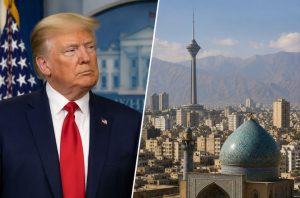
ASHINGTON — US President Donald Trump has sparked intense geopolitical discussion with highly publicized, unfiltered commentary regarding the massive crowds and foreign dignitaries attending the week-long state funeral of Iran’s late Supreme Leader, Ayatollah Ali Khamenei.
In a candid phone interview with Axios, Trump expressed outright surprise at the scale of public mourning on display in Tehran, given his long-standing assessments of the Iranian domestic climate. “I was shocked to see them crying. I thought people hated him,” Trump stated, before openly questioning the authenticity of the emotional public displays, adding, “Maybe it’s fake tears.”
The President further stoked controversy by highlighting the strategic vulnerability presented by the funeral proceedings, observing that the gathering of Iran’s entire political and military leadership in a single central location offered an unprecedented target. “They are all there. One shot [and we can take them all out], but we are not going to do that because then we would have nobody to negotiate with,” Trump remarked, indicating that ongoing diplomatic talks ultimately precluded any American military action during the event.
We knocked the hell out of Iran. They’re dying to settle. They want to settle so badly. We gave them a week off for a funeral, because we’re nice.
— DONALD TRUMP
Trump doubled down on his rhetoric during a July 3rd address at Mount Rushmore, delivered on the eve of the 250th anniversary of U.S. independence. Speaking to a celebrating crowd, the President framed a temporary pause in regional hostilities and ongoing negotiations as a deliberate, magnanimous concession by Washington to accommodate Iran’s national mourning timeline.
The President’s comments come amid an extraordinarily high-security, highly militarized atmosphere in Tehran, where Iranian authorities are organizing funeral rites expected to draw up to 20 million people paying tribute to the late Supreme Leader. The expansive, multi-stage mourning period began with a two-day lying-in-state at the Imam Khomeini Grand Mosalla mosque in Tehran before moving to the holy city of Qom. The procession is also slated to pass through the Iraqi cities of Najaf and Karbala, culminating in a final burial on July 9 at the Imam Reza shrine in Khamenei’s hometown of Mashhad.
To manage the massive projected influx of millions of regional pilgrims and mourners, Iranian state planning committees and local governments have deployed unprecedented logistical assets. To accommodate the movement of people, 11,000 buses were rerouted to Tehran and Mashhad for the ceremonies.
The logistical scale is matched by draconian security protocols designed to project state power and continuity during the transition of leadership. The sky above Tehran has been completely closed to commercial aviation, with local airports turning away all incoming flights. Ground transit is strictly controlled, with all roads leading to the central grand mosque blocked, while security forces armed with vehicle-mounted machine guns maintain a heavy presence across the capital. Streets throughout the city are filled with black banners, portraits of the late leader, and religious mourning phrases, juxtaposed against widespread state billboards displaying the message “Death to America.”
The funeral has also become a critical diplomatic focal point, with Iranian state media placing the number of participating nations above 100, while independent tallies count roughly 30 confirmed foreign delegations to navigate the political segments of the ceremony. With Western leaders entirely absent due to severe geopolitical rifts and the military conflict that resulted in Khamenei’s death, Iran’s most vital international partners sent top-tier political delegations to signal solidarity. Russia is represented by Deputy Chairman of the Security Council Dmitry Medvedev, China by He Wei, Deputy Chairman of the Standing Committee of the National People’s Congress, and Pakistan directly by Prime Minister Shahbaz Sharif.