UN Security Council Deadlock Deepens as Russia-Ukraine Tensions Spill into Belarus
Security Council emergency briefing on Bryansk bus strike highlights unyielding strategic mandates, regional deadlocks, and the breakdown of international compromise.

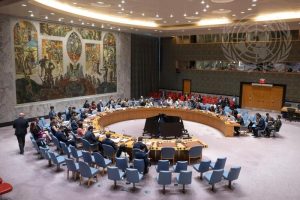
Global diplomatic mechanisms fractured into severe gridlock at the United Nations Security Council, following an urgent briefing convened over a reported drone attack on a civilian bus in Russia’s Bryansk region. The high-stakes emergency session vividly illuminated the widening chasm between Moscow’s insistence on classical regional spheres of influence and the rules-based international order vigorously defended by Western allies. The confrontation crystallized a deeper geopolitical reality: a severe erosion of bilateral trust has transformed standard international diplomacy into a high-stakes deadlock of competing mandates.
Addressing the council, Russia’s Acting Permanent Representative to the UN, Anna Evstigneeva, directly accused Western nations of bearing direct political and moral responsibility for the casualties. The strike—which hit a bus carrying a Belarusian youth soccer team en route to a holiday in the Russian resort city of Gelendzhik—killed one pregnant woman accompanying the group and injured nine others, including six children, according to figures cited by Russian and Belarusian authorities and confirmed by UN Assistant Secretary-General Martha Pobee in her June 29 Security Council briefing. Moscow framed the strike not as an isolated tactical error, but as an explicit component of a broader, coordinated Western strategy engineered to deal a definitive strategic defeat to the Russian state and systematically choke its national development.
Evstigneeva reasserted that Moscow will continue to counter these Western maneuvers through unyielding military measures, declaring that the foundational objectives of its special military operation remain entirely absolute and non-negotiable. She emphasized that Russia rejects Western ultimatums out of hand, operating strictly in accordance with its independent national security calculations. While acknowledging that a political and diplomatic resolution theoretically remains the preferred path to de-escalation, the Russian delegation delivered a grim prognosis to the international community, explicitly stating that such diplomatic avenues are currently not in sight.
We will not allow the Russian Federation and its war ally, Belarus, to use the Security Council to spread false narratives, propaganda, and disinformation, or divert attention from their ongoing aggression.
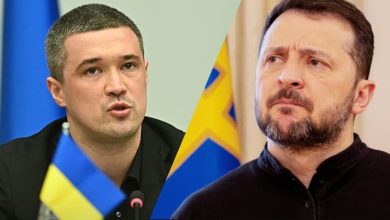
Ukraine’s Deputy Permanent Representative to the UN, Khrystyna Hayovyshyn, countered with a swift and total rejection of the accusations, labeling them as unfounded propaganda calculated to inflame regional proxy dynamics. Hayovyshyn contended that Kyiv possesses zero logical, political, or strategic interest in provoking neighboring Belarus or intentionally inflicting harm upon its civilian population. To substantiate this defense, the Ukrainian delegation cited an intercepted Russian internal document…confirming the absence of Ukrainian unmanned aerial vehicles in the specified airspace at the hour of the reported incident. Western representatives from the United States, France, and the United Kingdom aligned with Kyiv, warning against incendiary rhetoric and emphasizing that the council cannot validate serious battlefield accusations lacking verifiable, independent third-party confirmation.
The resulting diplomatic impasse underscores the profound structural paralysis of the United Nations Security Council when a veto-wielding permanent member is directly party to an active conflict. Because binding enforcement measures can be instantly blocked by a permanent member’s veto, critics argue the institution is structurally powerless to mandate peace or enforce an immediate cessation of hostilities. Yet, international historians and veteran diplomats emphasize that the UN’s utility shifts during an existential crisis from an enforcer of peace to an indispensable global pressure valve. It remains the singular international arena where adversaries are legally obligated to confront one another publicly, compelling states to justify their actions before a global audience while preserving a vital, quiet backchannel for negotiating grain corridors, nuclear plant safeguards, and prisoner exchanges.
This bitter diplomatic gridlock mirrors a broader political deadlock outside the UN chambers, highlighted by Russian President Vladimir Putin’s firm rejection of recent backchannel peace proposals from Kyiv. The Ukrainian framework had reportedly floated mutual constraints on long-range strategic strikes and a localized containment of heavy ground operations. Rather than adopting a submissive posture under the weight of an escalating military pounding, Ukrainian President Volodymyr Zelenskyy responded to the Kremlin’s rejection with public mockery, specifically noting that Moscow has been forced to reset its strategic operational deadlines for fully capturing the Donetsk region fifteen separate times since 2022. Pushed to a new target date of December 31, 2026, Zelenskyy warned that if Russia does not halt its operations, a million unmobilized citizens will eventually have to confront the prospect of mobilization themselves, as Russians already face localized domestic fuel shortages and long lines at gasoline hubs. This public defiance runs counter to the traditional tenets of classical geopolitical realism, which historically dictate that smaller states living in the direct shadow of a global superpower must pragmatically adapt to their giant neighbor’s security demands to survive.
Kyiv’s refusal to act as a submissive buffer state stems from a calculated belief that a compromise under Russia’s current terms would merely offer Moscow a tactical pause to retool before finishing a complete liquidation of Ukrainian sovereignty. Furthermore, an unprecedented influx of Western financial subsidies, advanced arms, and intelligence lifelines has artificially rebalanced the structural asymmetry, allowing Ukraine to operate effectively as the tip of a Western spear. This public projection of unbroken defiance serves as a vital resource-generating tool, designed to prevent internal domestic defeatism while actively demonstrating to Western taxpayers that funding the conflict remains a viable geopolitical investment.
Conversely, Moscow’s commitment to a prolonged campaign is anchored in its own explicit strategic logic, which frames the ongoing conflict as an existential necessity for long-term state survival. From the Kremlin’s perspective, establishing and maintaining permanent, unassailable territorial control over these frontier regions operates as a non-negotiable security buffer designed to permanently halt the eastward expansion of NATO infrastructure. Russian leadership asserts that accepting a negotiated settlement based on Kyiv’s terms would effectively legitimize a heavily fortified, Western-aligned military presence directly on its borders, which they argue poses an unacceptable risk to Russia’s sovereign defense architecture. This domestic and geopolitical narrative consolidates internal political stability by positioning the economic sacrifices and military costs of the war not as choices of regional ambition, but as an inevitable, defensive confrontation against Western encirclement. Consequently, as both leaderships remain deeply entrenched to avoid catastrophic political vulnerability at home, realists project a prolonged, devastating war of attrition rather than an immediate resolution or a clean, total victory for either side.