U.S.–Iran War Stalls at 40 Days as Ceasefire Hangs by a Thread
A fragile truce, oil shock, Pentagon scandal, and Iran’s growing leverage expose the limits of American power in a deepening war of attrition

T
he geopolitical landscape of the Middle East has entered a state of high-stakes, fragile suspended animation as the conflict between the United States and Iran reaches a critical forty-day milestone. As of April 22, 2026, what began as a rapid-response campaign titled “Operation Epic Fury” has morphed into a grueling war of attrition, leaving the global community to wonder if the projection of American military might has finally met an immovable object. While a temporary ceasefire technically remains in effect, the atmosphere in both Washington and Tehran is one of deep-seated diplomatic brinkmanship rather than a genuine move toward peace.
The state of affairs is currently defined by three crumbling pillars: a volatile truce, a fierce debate over international legitimacy, and a staggering economic toll. A two-week ceasefire brokered by Pakistan was slated to expire today, but President Trump announced a last-minute extension on Tuesday, claiming a desire to allow Iranian leaders time to submit a “unified” proposal. However, critics argue this extension is less about diplomacy and more about the reality of the Strait of Hormuz. With the world’s most critical oil chokepoint under a de facto blockade, global oil prices have skyrocketed, driving a massive 38% surge in U.S. gasoline costs since the war began.
This perception of American dominance is being further eroded by a major internal security scandal at the Pentagon. Unverified footage released by O’Keefe Media Group appears to show Andrew Hugg, the Chief of Chemical Nuclear Surety, disclosing sensitive operational details to an undercover reporter. While major news outlets note they cannot independently verify the claims, Hugg was reportedly escorted from the Pentagon and placed on administrative leave. The video, which shows a “mesmerized” Hugg discussing active nerve agents and alleged assassination plots, has created a credibility crisis, providing Tehran with significant propaganda leverage in the Islamabad negotiations.
Iran uses infrared systems instead of traditional radar. American fighters like the F-35 and F-15 are not designed to face these systems. Iranian airspace is no longer safe for U.S. fighter jets.
— RETIRED U.S. ARMY COLONEL, ABC NEWS
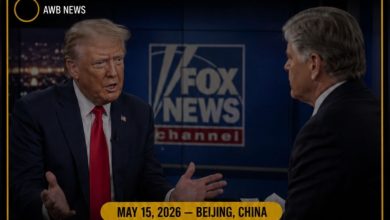
In the theater of public perception, the contrast between Truth Social and the reality in the Persian Gulf is stark. While the President posts about “blasting Iran into the Stone Age,” Tehran appears to be dictating the terms of the engagement. Iran has pushed forward a defiant 10-point plan demanding $145 billion in reconstruction reparations and a total lifting of sanctions before nuclear enrichment is even discussed. By refusing to enter negotiations from a position of “unconditional surrender,” the Iranian government is signaling to the world that its regime remains fully functional and unbowed.
ALSO READ: The Asymmetric Reckoning: How Iran’s Low-Cost Strategy is Neutralizing the American War Machine
Evidence of this defiance was made clear with the arrival of the Iranian tanker ‘Sili City’ at a southern Iranian port this week. Despite “multiple warnings and threats” from the U.S. naval blockade, the tanker was escorted through the Arabian Sea by the Iranian Navy and reached its destination safely. This maneuver has been widely characterized as a “show of force” that exposes the U.S. blockade as a porous, selective interdiction rather than an airtight wall. It demonstrates that when Iran chooses to provide military escorts, the U.S. is hesitant to fire the first shot for fear of a world-altering economic collapse.
The technological edge that once defined American air superiority is also being called into question. Military analysts have pointed to a critical vulnerability in the U.S. fleet: the shift from radar to passive detection. Military experts note that Iran has invested heavily in Infrared Search and Track (IRST) systems which do not emit signals, meaning U.S. pilots have no warning when they are being tracked. The loss of an F-15E Strike Eagle over the Iranian mountains earlier this month proved that high-performance engines remain “glowing” targets for Iran’s defensive grid.
Beyond the technical battlefield, the human cost remains a flashpoint of contention. While U.S. and Israeli intelligence estimates place Iranian military fatalities at over 6,000, Iranian state sources report lower figures, emphasizing that a significant portion of the casualties are civilians. This discrepancy has fueled condemnation from United Nations officials, who have labeled the February strikes a violation of the UN Charter. Reports of strikes on civilian infrastructure have left the U.S. and Israel increasingly isolated on the global stage.
Domestically, the political ground is shifting rapidly under President Trump’s feet. Recent polling shows his approval rating has plummeted to 37%, a second-term low. This decline is largely fueled by the economic fallout of the war, as over 90% of Americans report significant increases in gasoline and grocery prices. With the national gas average hitting $4.11 per gallon—a 38% spike since pre-war levels—more than half of registered voters now hold the president personally responsible for the “pain at the pump.”
This erosion of support is most visible among younger voters. A startling 75% of Gen Z respondents now sympathize more with Palestinians than Israelis, according to recent NBC News Decision Desk data. This generational shift has fundamentally changed the domestic perception of the war, as many young Americans view the joint U.S.-Israeli strikes in Iran as an extension of broader Middle Eastern policies they no longer support. As the conflict drags on, the once-reliable “rally ’round the flag” effect has been replaced by deep public skepticism.
As the Islamabad talks continue, the “Peace Through Strength” strategy has yet to yield the quick surrender the American public was promised. Instead, the conflict has entered a phase of economic strangulation and psychological warfare. Whether this leads to a permanent peace or a resumption of combat depends entirely on whether the U.S. can reconcile its projected might with the reality of its current strategic and domestic limitations. For now, the bombs stay on the wings, but the clock is firmly in Iran’s hands.
Why Your Support Matters
Support Our MissionFund Justice. Read Free.
VISA●● MCVerveAMEX⌘PayAFRIGO
🔒 100% Secure Payment Gateway