Venezuela Earthquake Death Toll Rises Past 1,400 as US Sends Warships
Twin 7.2 and 7.5 magnitude quakes devastate Caracas and La Guaira; Venezuela's interim government turns to the same US military that captured Maduro in January for aid

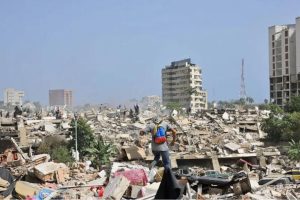
Rescue workers search through the rubble of collapsed buildings in Venezuela following the magnitude 7.2 and 7.5 earthquakes that struck the country on June 24, 2026. (Screenshot via PBS News)
Updated June 28, 2026
A catastrophic doublet earthquake struck northern Venezuela on June 24, 2026, killing hundreds of citizens and forcing a fractured interim government into a politically surreal humanitarian alignment with the United States. The seismic crisis hit a nation already severely destabilized by the armed extraction of its elected leader by foreign forces earlier this year.
The disaster began at 18:04 local time when a magnitude 7.2 foreshock ruptured along the Boconó-Morón-El Pilar Fault System near Yaracuy state. Merely 39 seconds later, a massive magnitude 7.5 mainshock tore through the same tectonic boundary. Seismologists confirmed the rapid succession triggered a highly destructive directivity effect, channeling explosive energy eastward directly into high-density urban corridors.
Dozens of non-ductile concrete towers throughout Caracas and the coastal port of La Guaira instantly imploded under the back-to-back blows. By June 28, National Assembly President Jorge Rodríguez put the death toll at 1,430, with more than 3,200 injured — a dramatic escalation from the 235 dead reported just two days earlier. USGS modeling had warned in the earthquake’s immediate aftermath that the toll could climb into the thousands, with a meaningful probability of exceeding 10,000. Officials caution the figure may rise further as search-and-rescue teams reach previously inaccessible areas. The toll had risen steadily through the week: an early UN-cited figure of 164 deaths gave way to 188 reported by the National Assembly, then 235 from the Health Ministry by June 26, before the current confirmed count of 1,430.
Venezuela’s restricted media landscape has complicated efforts to track the human toll throughout the crisis. More than 200 websites remain blocked in the country, including independent news outlets and social media platforms, a restriction the United Nations has urged authorities to lift, calling unimpeded access to information “a matter of life and death” during the response.
Authorities have deployed emergency rescue teams from other parts of the country to La Guaira, where dozens of buildings have collapsed, officially designating the heavily hit coastal region as a disaster zone.
The domestic emergency has unfolded amidst an extraordinary geopolitical reality that critics label a severe, embarrassing compromise of national dignity. In January 2026, U.S. special operations forces launched Operation Absolute Resolve, a dramatic military incursion into Caracas that abducted President Nicolás Maduro to face narco-terrorism charges in a New York federal court. Following the raid, Washington took control of Venezuela’s oil exports, routing early proceeds through an offshore account in Qatar—an arrangement Energy Secretary Chris Wright later confirmed and moved to a U.S. Treasury account by February. By May, President Trump himself said the oil revenue had covered the cost of the U.S. military campaign against Iran “about 25 times over”, a claim he made without providing supporting figures. While some sanctions have been lifted since the military strike in January, the government is still grappling with the effects of decades of structural underinvestment.
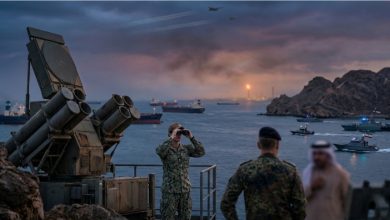
The current crisis has forced the interim administration into an ironical reliance on its geopolitical antagonist. The same U.S. military apparatus that jammed Venezuelan defenses six months ago has deployed the amphibious transport ship USS Fort Lauderdale and the littoral combat ship USS Billings to deliver a $150 million emergency package. While $100 million is routed through United Nations channels, the immediate presence of American helicopters over Caracas underscores the deep erosion of domestic agency.
Global deployment forces have rapidly mobilized to assist the administration in managing the widespread devastation. More than 520 responders from eight European Union member states have mobilized under the Civil Protection Mechanism, including Czechia, Spain, Italy, France, Germany, Portugal, and the Netherlands, while Luxembourg provides specialized emergency telecommunications, shelter, and energy equipment. India deployed two Air Force C-17s… alongside emergency humanitarian aid pledged by China.
The international relief footprint has quickly expanded to include a 67-member team of rescue experts and medics from Turkey, six military transport planes from Germany, and 80 personnel with rescue dogs from Switzerland. Regional neighbors and global partners including Brazil, Canada, Mexico, Colombia, El Salvador, and Cuba have also dispatched dedicated search-and-rescue teams to bypass crippled infrastructure. In an unprecedented diplomatic shift, Rodríguez publicly confirmed a coordination call with U.S. Secretary of State Marco Rubio, expressing formal gratitude for Washington’s expressions of solidarity.
As heavy rescue crews deploy acoustic listening arrays across the ruins, the true operational challenge remains the closing 72-hour survival window for trapped citizens. The ultimate consequence of the doublet earthquake remains an open-ended crisis of survival, leaving an emergency response environment shaped heavily by the dynamic of dependency on the very external powers currently dictating the terms of Venezuela’s sovereign resources.
📺 Watch: See the devastating scale of destruction left behind by the Venezuela earthquake in The AWB News’ video report.
Watch on YouTube →