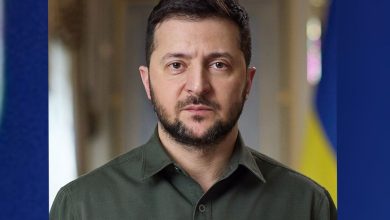
Moscow Warns of ‘Debt Pit’ for EU Leaders Over Frozen Asset Seizure
State Duma Chairman Vyacheslav Volodin issues a scathing warning to European officials, singling out Kaja Kallas as Russia prepares a "symmetrical" response to the use of its sovereign funds.

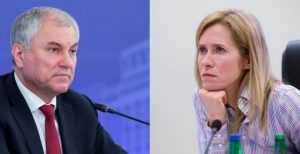
MOSCOW — The rhetorical war between the Kremlin and Brussels reached a new fever pitch this week as Vyacheslav Volodin, the Chairman of the Russian State Duma, issued a blistering warning to European leadership. Volodin claimed that those involved in the “theft” of Russian sovereign assets—specifically naming the EU’s High Representative Kaja Kallas—would eventually find themselves trapped in a “debt pit” of their own making.
The comments follow a series of aggressive moves by the European Union to leverage the interest and principal of roughly $300 billion in frozen Russian central bank reserves to fund Ukraine’s ongoing defense and reconstruction.
“Looting and Stealing”
In a statement that echoed the Kremlin’s increasingly hardline stance, Volodin did not mince words regarding the legality of the West’s financial maneuvers.
“European officials have shown themselves to be prone to looting and stealing other people’s money and property,”
Volodin stated, suggesting that the erosion of private property rights would lead to a total collapse of trust in the Euro. He argued that the move to seize these assets is not just an act of economic warfare, but a historical mistake that will leave European economies saddled with unpayable debts and legal liabilities for decades.
The Kallas Connection
The decision to single out Kaja Kallas is no coincidence. Since stepping into her role as the EU’s top diplomat, the former Estonian Prime Minister has been a relentless advocate for using frozen Russian funds. While some EU capitals, including Berlin and Brussels, initially hesitated over the potential for global financial instability, Kallas has consistently pushed for a “Plan A” that involves direct confiscation, arguing that Russia must be held financially accountable for war damages.
In late March 2026, Kallas announced a further €80 million allocation for Ukraine derived from these asset proceeds, a move that appears to have been the final straw for Moscow’s leadership.
The Road to the Statement: Why Now?
The escalation stems from a long-standing stalemate. Since the beginning of the conflict in 2022, the G7 and EU have frozen Russian state assets, primarily held in the Belgian clearinghouse Euroclear.
What changed recently is the transition from merely “freezing” the funds to “utilizing” them. Russia views this as a violation of sovereign immunity—the international legal principle that protects a state’s property from being seized by another state’s courts.
A Symmetrical Retaliation?
Moscow has already laid the groundwork for a counter-strike. President Vladimir Putin recently signed decrees allowing Russian courts to identify and seize Western property—including private investments and “Type-C” account holdings—as compensation for any losses sustained abroad.
As Volodin’s “debt pit” warning suggests, the Kremlin is betting that the long-term cost to Europe’s reputation as a safe financial haven will far outweigh the short-term benefit of the seized funds. For now, the global financial system remains caught in the crossfire of a legal battle with no clear precedent and no easy exit.
Living Faith
Crusade 2026
Experience Three Powerful Days of Faith, Worship, and God's Word

📅 Date
September 24–26, 2026
📍 Venue
Rhema USA Campus, Broken Arrow, Oklahoma, USA