Europe’s Wildfire Season Nears Record as Economic Toll Deepens
Over 320,000 hectares burned, mass evacuations across six nations, and a mounting billion-euro bill test Europe's climate resilience.

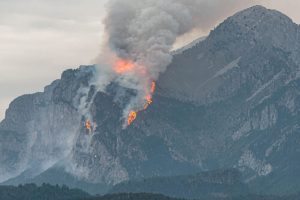
Across the sun-baked landscapes of Southern Europe, emergency crews and multinational task forces remain on high alert as uncontrollable wildfires continue to sweep through forests, agricultural fields, and suburban fringes. Satellite data and official monitoring from the European Forest Fire Information System (EFFIS) confirm that total burnt land area across the European Union has reached more than 320,000 hectares as of late July, surging past long-term historical averages and establishing a destructive trajectory. Fueled by compounding summer heatwaves exceeding 40°C (104°F), long-term drought conditions, and erratic seasonal winds, the ongoing crisis has transformed routine environmental weather into a structural threat to the European continent.
The geographical impact reveals a stark divide between Southern Europe and the rest of the continent. The hardest-hit nations—Spain, France, Portugal, Greece, Italy, and Türkiye—are currently battling multi-front blazes that have forced mass evacuations and prompted national emergency declarations. Spain stands at the epicenter of the destruction after declaring a national state of emergency with over 150,000 hectares incinerated, including a devastating blaze in Almería that marked the deadliest wildfire in Andalusia’s history. Southwestern France has endured its worst forest fire crisis since World War II, particularly in the Gironde region near Bordeaux, where mega-fires consumed more than 100,000 acres and triggered sweeping evacuations around Arcachon. Portugal’s largest blaze of the year, near Vouzela in the Viseu district, burned roughly 13,500 hectares, sending heavy smoke plumes drifting hundreds of kilometers across regional corridors, while Greece, Italy, and Türkiye continue to mobilize military and civil protection assets to protect coastal settlements, Aegean islands, and major urban peripheries like Athens and Thessaloniki.
While Southern Europe bears the brunt of catastrophic land loss, Central and Northern European states have experienced localized, non-typical ignitions triggered by extreme heat spikes. In the United Kingdom, fire brigades have been stretched thin combating moorland and mountain blazes across Wales, the Scottish Cairngorms, and Dovestone Moor. Germany has dealt with complex forest fires ignited on former military grounds where unexploded historical ordnance complicates ground operations, while Ireland, Croatia, Norway, and broader Northern Europe have registered localized heathland blazes. Though smaller in scale, these northern outbreaks highlight an expanding geographical footprint for wildfire risks across the European continent.
The expanding perimeter of wildfire hazards across Europe reflects a fundamental shift in regional climate exposure. As intense heatwaves interact with prolonged moisture deficits, traditional containment strategies are pushed to their operational limits.
— KEY STRATEGIC TAKEAWAY
The visual landscape of this crisis presents a striking contrast between daily European life and ecological collapse. Photographs capturing blood-orange smoke columns towering over historic terracotta roofs and crowded Mediterranean resorts reflect a stark human horizon. Low-altitude aerial views document water-bombing aircraft dropping vivid red chemical retardant along mountain ridges, while drone footage reveals vast expanses of scorched black ash where dense pine ecosystems once stood. On the ground, the human toll is marked by residents fleeing advancing fire fronts with minimal personal belongings while local volunteers assemble manual bucket lines to protect neighboring homes.
Underlying these visuals is a clear climate trend. Europe is currently warming at roughly double the global average rate, making it the fastest-warming continent on the planet. This rapid temperature rise creates a compound effect: consecutive dry winters and parched springs deplete vegetation moisture, turning landscapes into explosive tinderboxes long before peak summer arrives. Consequently, Mediterranean fire seasons that were historically confined to late July and August now regularly stretch from early June well into late September. Beyond immediate land destruction, wildfire smoke transports hazardous fine particulate matter (PM2.5) thousands of miles into major European population centers, creating severe, widespread public health risks.
The cascading effects of these fires have severely strained essential municipal and residential infrastructure. Tens of thousands of displaced households have placed enormous demands on local governments, forcing the emergency conversion of sports complexes and schools into temporary evacuee shelters while fire fronts trigger major highway closures and regional rail suspensions. Public utility grids face extreme operational pressures; heat-damaged power lines cause rolling blackouts that disable home air conditioning during life-threatening heatwaves. Simultaneously, intense municipal water consumption by firefighting operations—combined with drought-depleted reservoirs—causes sharp drops in tap pressure, while toxic ash runoff into regional watersheds triggers boil-water advisories. Health systems are experiencing acute emergency room surges driven by heatstroke, smoke inhalation, and respiratory distress, while routine medical care and pharmacy operations in evacuated municipalities remain suspended.
From an economic perspective, the impacts transition rapidly from immediate operational shocks to long-term structural liabilities. In the short term, peak summer travel in July and August suffers immediate revenue losses as beach resorts evacuate, flights cancel, and hospitality businesses face widespread dropouts. Direct state expenditures on suppression—deploying specialized ground forces, military personnel, and aircraft—run into millions of euros daily, with national suppression budgets scaling into billions. Agricultural and forestry sectors face devastating asset losses as commercial timber reserves, historic olive groves, and vineyards are incinerated. For wine producers, even surviving crops face total economic loss due to smoke taint, which permanently damages grape chemistry.
Over the long term, the economic consequences pose a significant threat to regional stability. Property values across Mediterranean forest margins face persistent downward pressure as insurance providers confront record claims, leading to sharp premium spikes or complete market withdrawals from high-risk zones. Research published in the Journal of Environmental Economics and Management documents a measurable macroeconomic impact, identifying an average decrease in a region’s annual GDP growth rate of 0.11% to 0.18% following wildfire events. While sectors like retail, transport, and tourism experience immediate contractions, the overall labor market shifts as demand grows in insurance, real estate, and administrative recovery. Multi-year fire cycles can accumulate to a potential permanent GDP drag of 3.3% to 4.8%. The economic landscape is further reshaped by a geographic shift in European tourism—often termed “cool-cationing”—where travelers increasingly opt for cooler northern destinations like Scandinavia and the Baltic states, gradually eroding the Mediterranean’s primary economic driver. Furthermore, ecological recovery cycles span decades; intense soil degradation causes severe erosion and mudslide risks during winter rains, while destroyed olive groves and timber plantations require 15 to 30 years to reach productive maturity.
We estimate an average contemporary decrease in a region’s annual GDP growth rate of 0.11–0.18% conditional on having experienced at least one wildfire.
— SARAH MEIER, ROBERT J.R. ELLIOTT & ERIC STROBL (JEEM, 2023)
Despite the scale of the ongoing crisis, European authorities are implementing strategic policy reforms and operational upgrades. Under the EU Civil Protection Mechanism and the rescEU strategic reserve, international solidarity has reached unprecedented operational levels. Hundreds of firefighters from across European nations are currently pre-positioned across Mediterranean hotspots, supported by a dedicated European fleet of specialized water-bombing aircraft and helicopters stationed for immediate cross-border dispatch. Real-time satellite tracking through the EU Copernicus Emergency Management Service and EFFIS provides command centers with predictive modeling and live fire-line monitoring.
Crucially, European fire management is shifting away from purely reactive suppression toward proactive landscape strategy. Through the European Commission’s Integrated Wildfire Risk Management Strategy, member states are investing in clearing dead biomass, constructing strategic firebreaks, reintroducing natural grazing livestock, and replacing highly flammable monoculture forestry with diverse, fire-resistant ecosystems. While extreme weather events continue to test the continent, this transition toward cross-border resource sharing, high-tech early warning systems, and long-term land stewardship provides a clear path toward building climate resilience across Europe.