Beheading of Nigerian Teacher Ignites Global Reckoning Over Megachurch Political Accountability
The murder of Michael Oyedokun during the Oyo State school abduction has collided with a generational crisis of faith and power, forcing Pastor Adeboye and Africa's most influential religious empire into the centre of Nigeria's most volatile political debate.

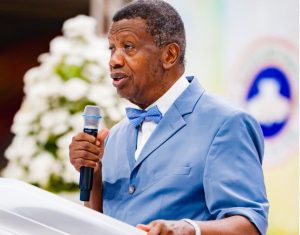
The gruesome beheading of a 57-year-old mathematics teacher in southwestern Nigeria has ignited a global digital proxy war over the political accountability of West Africa’s powerful “megachurch” pastors. The murder of Michael Oyedokun during a mass school abduction in Oyo State has collided with long-simmering generational frustrations over the alleged political neutrality of religious titans like Pastor Enoch Adejare Adeboye, the General Overseer of the Redeemed Christian Church of God (RCCG). Once celebrated globally by *Newsweek* as one of the world’s 50 most powerful people alongside Pope Benedict XVI, Adeboye now finds his immense influence weaponized by a younger, hyper-connected generation of Nigerians demanding that spiritual capital be converted into direct political resistance.
The immediate catalyst for the unrest occurred when armed groups launched a coordinated assault on three educational facilities in Oriire, a remote rural district in Oyo State, southwestern Nigeria, seizing a school principal, seven teachers, and 39 students. Within 48 hours, the captors executed Oyedokun, a dedicated educator who left behind a grieving wife, while another teacher, Joel Adegboye Adesiyan, was fatally shot while attempting to escape through a classroom window from the kidnappers. The shocking nature of the raid, striking a region historically spared the systemic school abductions seen in Nigeria’s northern territories, triggered instant labor strikes and mass demonstrations by the Nigeria Union of Teachers (NUT), the country’s principal educators’ union, in Ibadan, Oyo State’s capital.
Yet, as grieving parents and secular labor unions paralyzed local infrastructure to demand federal rescue operations for the remaining 39 children, a parallel, highly volatile narrative erupted across international social media platforms. Rumors quickly intensified among younger digital activists claiming that a national street protest organized by the RCCG had been abruptly cancelled on orders from its leadership. Critics aggressively contrasted this perceived inaction with historical precedents, alleging that Adeboye had previously led high-profile public marches to undermine the past administration of President Goodluck Jonathan, but was now maintaining a “selective silence” to protect the current government of President Bola Tinubu.
Speaking with AWB News in Lagos, an RCCG member who declined to be named dismissed the accusations entirely, attributing the online firestorm to the broader frustrations gripping the country rather than any genuine evidence of political bias, arguing that many young Nigerians were simply transferring their economic aggression onto a convenient institutional target. Pastor David Chimma of Ebenezer Church — notably not an RCCG affiliate — went further, calling the narrative a total spin and urging those responsible to seek God’s forgiveness, describing Adeboye as a man whose singular heartbeat has always been the wellbeing of all Nigerians regardless of party or candidate.
Perhaps the most striking rebuttal came from a former local government councillor in Oyo State who identified himself to AWB News as a diehard supporter of NDC presidential candidate Peter Obi, whose running mate is former Kano Governor Rabiu Kwankwaso — making him an unlikely defender of the RCCG’s General Overseer. He called the selective silence allegations flatly untrue, pointing to a largely forgotten episode from December 2016 when Adeboye visited Ekiti State and publicly praised then-Governor Ayodele Fayose — an opposition PDP figure — for his courage and boldness in defending his people and the cause of the common man — a posture that included mobilising local hunters against armed herdsmen and Boko Haram-affiliated infiltrators. The APC, then the ruling party at the federal level and today the party of President Tinubu, launched a furious assault on Adeboye over that praise, alleging bribery and demanding he withdraw his comments. The councillor posed a pointed question to today’s critics: did any of those currently vilifying Adeboye raise their voice to defend him when the APC attacked him for standing by an opposition governor a decade ago?
The political reality underlying the dispute is deeply entangled with institutional proximity, as Nigeria’s First Lady, Senator Oluremi Tinubu, happens to be a long-standing, ordained Assistant Pastor within the RCCG hierarchy. This dual identity has led a highly skeptical youth demographic—grappling with severe domestic economic inflation and persistent insecurity—to openly accuse the global church network of harboring a structural conflict of interest. Activists argue that the church’s vast platform, which spans millions of followers across more than 100 nations, is being intentionally restrained to avoid embarrassing the presidential villa — Nigeria’s seat of executive power.
Pastor Adeboye is a clergyman and not the Commander-in-Chief of the Armed Forces. Expectations for him to command the President or the First Lady on how to run the affairs of the nation are misplaced.
— REDEEMED CHRISTIAN CHURCH OF GOD STATEMENT
In a sweeping, formal clarification issued by church officials, the RCCG’s communications team strongly defended their leader’s spiritual independence while systematically dismantling the digital timelines used against him. They clarified that the widely circulated image of him carrying an anti-insecurity placard occurred under the presidency of Muhammadu Buhari rather than Jonathan, and was executed under the collective directive of the Christian Association of Nigeria (CAN) rather than as an isolated political maneuver. Church leaders also explicitly denied claims that Adeboye had cancelled a planned protest, explaining that he had merely communicated a standard institutional directive from the Pentecostal Fellowship of Nigeria (PFN) to shift a three-day prayer programme’s grand finale to a centralized venue with a rally held around it. They affirmed that the First Lady’s pastoral ordination occurred over a decade ago based strictly on spiritual merit, rather than modern political alignments, emphasizing that the mission maintains strict non-partisan neutrality across its vast international folds.
This collision between structural ecclesiastical governance and raw public grief underscores a deeper, structural shift in how authority is perceived in Africa’s most populous nation. While the older generation respects the institutional protocols of religious leaders who claim to operate strictly “under spiritual authority” and ecclesiastical consensus, younger citizens increasingly view these massive religious empires as vital civic actors that owe protection to the state’s most vulnerable. Ultimately, the tragedy in Oyo State highlights that in an era of escalating security crises, the global influence of Africa’s religious leaders — whose megachurches now span continents from Lagos to London, Brussels, Moscow and to Chicago — will no longer be measured merely by the size of their congregations, but by their willingness to confront temporal power on behalf of the societies they shepherd.
For more context, see the RCCG Exposes 3 Lies Against Pastor Adeboye, Warns Nigerians to explore direct media coverage and public reactions surrounding this developing security crisis.
Living Faith
Crusade 2026
Experience Three Powerful Days of Faith, Worship, and God's Word
📅 Date
September 24–26, 2026
📍 Venue
Rhema USA Campus, Broken Arrow, Oklahoma, USA