China Strikes Back with Dual Export Restrictions and Procurement Bans on U.S. Defense and Rare Earth Sectors
Beijing deploys industrial leverage against 56 American entities in an asymmetrical retaliation following Washington's Pentagon blacklist expansion.

China’s Ministry of Commerce announced sweeping export restrictions on 10 prominent American defense, aerospace, and rare earth corporations, escalating a long-running geopolitical standoff between Washington and Beijing over supply chain dominance. The targeted entities—which include Aveox, Red Cat Holdings, Teal Drones, IMSAR, Jaia Robotics, Ball Aerospace & Technologies, Oshkosh Defense, L3Harris Maritime Services, MP Materials, and USA Rare Earth—are now completely barred from receiving China-origin dual-use items, technologies, and services. Under the new mandate, all active export activities involving these businesses must cease immediately, and third-party organizations worldwide are strictly prohibited from transferring Chinese-origin dual-use materials to them.
In a separate but coordinated decree issued the same day, China’s Ministry of Finance enacted a wide-ranging government procurement ban targeting a completely distinct list of 46 American defense contractors. This procurement blacklist bars Chinese state agencies and government-affiliated buyers from procuring any goods or services manufactured by industry giants such as Lockheed Martin Corporation, Raytheon Missiles & Defense, Boeing Defense, Space & Security, General Dynamics, Shield AI, Anduril Industries, and Edge Autonomy. Unlike the Commerce Ministry’s blanket export embargo, the Finance Ministry’s procurement restrictions explicitly exclude U.S.-invested companies and subsidiaries that are physically operating inside Chinese territory.
The dual maneuvers from Beijing serve as a direct, symmetric response to the U.S. Department of Defense’s decision to expand its Section 1260H “Chinese Military Companies” blacklist. Washington’s expanded roster penalizes 188 Chinese entities, most notably absorbing commercial and technological heavyweights like Alibaba, Baidu, NIO, and BYD—the world’s largest electric vehicle manufacturer. The U.S. government maintains that these commercial enterprises are inextricably linked to Beijing’s state-sponsored military-civil fusion strategy. By adding them to the 1260H registry, the Pentagon triggers strict statutory bans that prohibit the U.S. military from executing or renewing direct defense contracts with these firms, systematically freezing them out of the American defense industrial ecosystem.
A spokesperson for China’s Ministry of Commerce forcefully condemned the U.S. blacklist expansion, characterizing Washington’s enforcement as “malicious actions” that weaponize national security frameworks to disrupt legitimate international trade. Beijing’s response aims directly at the vulnerabilities of the American industrial apparatus by restricting the flow of critical components and specialized raw materials to corporations tasked with spearheading America’s domestic mineral independence. The timing of the American blacklist expansion has drawn intense scrutiny from international trade diplomats, coming just weeks after a high-stakes bilateral summit in May intended to forge a tentative truce and stabilize volatile cross-border trade relations between the world’s two largest economies.
Adding a layer of complexity to the escalating standoff, a temporary partial suspension of stricter Chinese rare earth export rules—originally brokered during the Trump-Xi summit—remains technically in effect until November 10, 2026. This lingering diplomatic buffer zone means that while both nations are actively accelerating parallel regulatory penalties, they have stopped short of triggering a total trade freeze. However, independent security and trade intelligence reports indicate that the ongoing conflict has devolved into an asymmetrical standoff, where neither superpower commands absolute leverage, as Washington and Beijing dominate entirely separate, mutually dependent sectors of the global manufacturing chain.
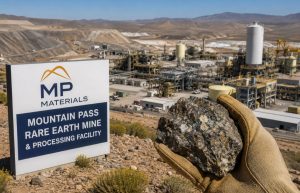
In the near term, factual data confirms that China holds a distinct advantage regarding the defense and renewable energy supply chains due to its overwhelming infrastructure monopoly. Although American enterprises like MP Materials operate major domestic mining operations such as the Mountain Pass facility in California, the U.S. remains heavily reliant on Chinese industrial infrastructure to refine raw mined minerals into commercial-grade oxides and permanent magnets. According to data from the International Energy Agency (IEA), China currently dictates roughly 94 percent of the world’s rare earth magnet production and 91 percent of specialized refining infrastructure, alongside controlling roughly 98 percent of the global refined supply for vital dual-use electronics materials like gallium and germanium.
The principal objective of Washington’s list is to identify where Chinese firms may be seeking to embed themselves in the U.S. defense industrial base.
— DAVID SHEDD
While the strategic architecture behind America’s regulatory aggression remains focused on insulation, as former acting director of the Defense Intelligence Agency David Shedd noted to industry journal The Brief following the initial 1260H expansion, executing that strategy faces steep structural barriers. Trade experts caution that building domestic extraction sites takes years, whereas mastering and constructing large-scale chemical refining infrastructure requires close to a decade. In reports published by state media outlet China Daily, Beijing officials made it clear that by restricting dual-use materials to Western mineral developers, they are actively attempting to disrupt the United States’ ability to construct viable independent processing facilities on its own soil.
Furthermore, state-directed economic systems like China’s possess a structurally higher tolerance for supply chain friction than Western market economies. Publicly traded American defense contractors operate under unrelenting pressure from Wall Street to protect quarterly profit margins and maintain consistent production timelines, leaving them highly sensitive to sudden raw material shortfalls. Conversely, Beijing can absorb localized financial losses within its state-owned enterprises to prioritize long-term macroeconomic leverage over foreign adversaries, allowing it to utilize its mineral dominance as a highly coordinated geopolitical instrument.
Conversely, the United States commands a definitive upper hand in long-term financial warfare and technological intellectual property. The 1260H designation fundamentally alters the commercial reality for Chinese tech giants, casting a shadow of compliance risk over any international corporation attempting to maintain relationships with them. By labeling Alibaba and Baidu as military-linked entities, Washington effectively chokes off their access to American capital markets and deters Western venture capital groups from funding future research pipelines, placing an institutional ceiling on the growth of China’s premier commercial brands.
To counter its immediate vulnerabilities, Washington is aggressively deploying its financial might to orchestrate a massive, multi-decade migration of the global industrial base away from Chinese territory. The U.S. government has authorized billions of dollars in domestic mining grants and successfully forged expansive strategic mineral alliances with resource-rich allies including Australia, Saudi Arabia, and several Southeast Asian nations. This multi-front diversification effort is designed to decouple Western defense supply lines from Beijing entirely, aiming to achieve structural self-sufficiency in critical minerals.
The current economic landscape functions as a delicate, high-stakes equilibrium between immediate industrial vulnerability and future structural independence. If a total supply chain embargo were executed, Beijing’s absolute grip on refined rare earth elements could severely cripple the immediate production of advanced U.S. guided missiles, stealth fighter jets, and commercial electric vehicles. Yet, by choosing to exercise this leverage, China accelerates the exact Western decoupling strategy it aims to prevent, ensuring that Washington will continue to pour unprecedented capital into permanently isolating China from the future global high-tech economy.
Living Faith
Crusade 2026
Experience Three Powerful Days of Faith, Worship, and God's Word

📅 Date
September 24–26, 2026
📍 Venue
Rhema USA Campus, Broken Arrow, Oklahoma, USA


