Germany Unveils Historic Military Pivot, Names Russia Top Threat; as Russia Targets Energy Lifeline
Berlin targets a 460,000-strong "war-ready" force while bracing for a retaliatory May 1st oil transit halt.

B
ERLIN — German Defence Minister Boris Pistorius on April 22 unveiled the Bundeswehr’s first standalone military strategy, establishing a path to 460,000 total personnel by 2035. The 35-page document explicitly identifies Russia as the primary threat to European security, marking a definitive shift in Berlin’s geopolitical priorities.
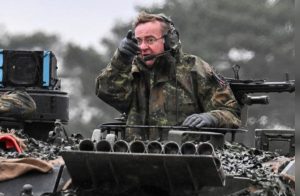
The proposed force structure comprises 260,000 active-duty soldiers and 200,000 reservists, a significant expansion from the current strength of approximately 184,000. Pistorius framed the pivot as a “strategic necessity,” asserting that Germany must be “war-ready” (*kriegstüchtig*) to deter potential Russian aggression against NATO territory.
“Russia is preparing for a military confrontation with NATO and is willing to use military force to advance its interests,” Pistorius said during a news conference at the Ministry of Defence. “Our goal is simple but ambitious: to field the strongest conventional army in Europe to ensure that any attack on our allies would be a calculation of failure for Moscow.”
Our goal is simple but ambitious: to field the strongest conventional army in Europe to ensure that any attack on our allies would be a calculation of failure for Moscow.
— BORIS PISTORIUS
The strategy marks the first comprehensive military reset since the end of the Cold War and signals a final departure from Germany’s decades-long “culture of restraint.” Beyond personnel, Berlin is prioritizing long-range strike capabilities, including the acquisition of JASSM-ER cruise missiles for its future F-35 fighter jets. The plan also emphasizes “information superiority” through expanded cyber and space domains, preparing the military for the reality of “grey zone” warfare.
However, the ambitious targets face immediate logistical hurdles. The government implemented a voluntary service model in January 2026, with compulsory service embedded as a fallback triggerable by parliamentary vote if recruitment targets are missed.
Analysts at the Centre for Eastern Studies in Warsaw note that the reform does not address persistent shortfalls in professional soldier numbers. They describe the current measures as “unlikely to result in a significant increase in the size of the Bundeswehr” without more aggressive structural changes to the labor model.
As Germany moves to serve as NATO’s primary logistics and reinforcement hub—with classified plans envisioning transit for up to 800,000 allied troops in crisis scenarios—the strategy accelerates a shift begun under the 2022 *Zeitenwende* declaration. Geopolitically, the announcement has already triggered a sharp reaction from the Kremlin.
ALSO READ: U.S.–Iran War Stalls at 40 Days as Ceasefire Hangs by a Thread
Deputy Chairman of Russia’s Security Council Dmitry Medvedev dismissed the move as a return to “dangerous patterns,” stating, “The year is 2026, not 1933.” Medvedev has systematically employed inflammatory historical analogies since 2022; however, independent analysts caution against treating his statements as representative of unified Kremlin policy.
In a move widely interpreted as economic retaliation, Russia confirmed it will halt the transit of Kazakh crude oil through the Druzhba pipeline starting May 1. The suspension directly threatens the PCK Schwedt refinery, which supplies 90% of the fuel for Berlin and Brandenburg. While the German government maintains that strategic reserves are sufficient to prevent immediate fuel shortages, the timing of the cutoff highlights the escalating tension between Europe’s largest economy and its former primary energy supplier.
The success of this military pivot now depends on Berlin’s ability to maintain public support for massive defense spending while navigating an impending energy supply shock. With the 2027 “funding cliff” approaching, Germany’s transition into a “framework nation” remains the most watched development in European security, testing whether the continent’s economic engine can successfully transform into its military shield.
Living Faith
Crusade 2026
Experience Three Powerful Days of Faith, Worship, and God's Word

📅 Date
September 24–26, 2026
📍 Venue
Rhema USA Campus, Broken Arrow, Oklahoma, USA