Iran’s Rains Return Amid Claims of “Atmospheric Warfare”
Record-breaking downpours end years of drought, but suspicions grow that shifting skies reflect more than natural climate forces

T
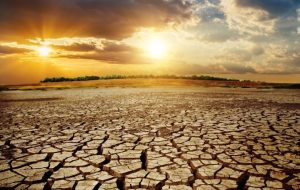
EHRAN – For nearly a decade, the Iranian plateau has been defined by the cracked earth of a disappearing Lake Urmia and the dust of relentless drought, but as of late April 2026, the sky has finally broken its silence. Across the Islamic Republic, record-breaking precipitation is flooding streets and filling reservoirs that many feared were permanently dry. However, this sudden meteorological shift is being viewed through a dark lens of suspicion. Following a series of high-stakes military strikes that neutralized key regional radar installations, a growing chorus of Iranian officials and citizens are making a startling claim: the drought was never natural; it was an act of weather warfare that has finally been defeated.
There is no publicly available scientific evidence supporting these claims, but they are gaining traction in Iranian public and political discourse.
The theory centers on the destruction of advanced Western and allied radar systems, including the AN/TPY-2 and AN/FPS-132 arrays in Jordan, the UAE, and Qatar. While these systems are officially designated for missile defense, proponents of the “Atmospheric Blockade” theory argue they served a dual, covert purpose—using high-frequency electromagnetic waves that proponents claim could create high-pressure “domes” that effectively pushed rain clouds away from Iranian borders.
It is no coincidence that the clouds returned the moment the electronic wall was brought down. For years, we watched moisture disappear at the border, while neighboring countries remained lush.
— REGIONAL SECURITY ANALYST
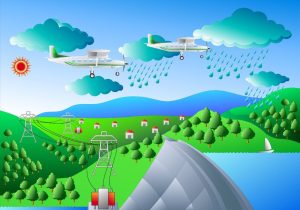
The concept of “stealing rain” is not merely the stuff of science fiction. Known formally as environmental modification, weather warfare has historical roots in the U.S. military’s Operation Popeye during the Vietnam War, which successfully extended the monsoon season to impede enemy supply lines. This precedent led to the 1977 United Nations ENMOD Treaty, which prohibits the hostile use of weather modification. Yet, in 2026, many believe the technology has evolved far beyond simple cloud seeding into the realm of atmospheric ionization and ionospheric heaters—tools they claim could steer the jet stream itself to deny a rival nation its water security.
ALSO READ: Coordinated Attacks Across Mali Intensify Fighting in Kidal and Central Regions
This suspicion is deepened by the memory of strategic “water diplomacy” campaigns from years prior. Since a 2018 address in which Israeli Prime Minister Benjamin Netanyahu used a glass of water to highlight Israel’s water technology, he has periodically released video messages directed at the Iranian public, including a high-profile statement in August 2025. In the latest message, he referred to water shortages in Iran, which he attributed to government policy and infrastructure decisions, and promoted Israeli desalination and water recycling technologies. He also linked the issue to broader political change in Iran, saying that “the thirst for water in Iran is only matched by the thirst for freedom.” Netanyahu further linked a change in leadership to the introduction of Israeli water technology, saying that if the “regime” were replaced, Israel would deploy its desalination and water recycling expertise to address Iran’s water challenges.

To many observers, these messages were more than humanitarian offers; they were perceived as psychological operations that weaponized a real vulnerability. By framing water as a reward for political upheaval, the messaging attempted to undermine the legitimacy of the Iranian government from within. This strategy utilized the drought as a form of geopolitical leverage, suggesting that the “freedom” of the Iranian people was the only key to unlocking the clouds or, at the very least, the technology required to survive without them.
ALSO READ: U.S. “Arms Sales” to Israel Face Scrutiny Over Funding Structure
Scientific skeptics, however, warn against confusing correlation with causation. Meteorologists point to a “super-charged” El Niño cycle as the primary driver of the rain, alongside “combat seeding”—a phenomenon where soot and particulates from the recent destruction of infrastructure act as artificial nuclei for raindrops. The atmosphere, they note, remains a chaotic and global system influenced by broader climate dynamics rather than localized technological interventions.as the primary driver of the rain, alongside “combat seeding”—a phenomenon where soot and particulates from the recent destruction of infrastructure act as artificial nuclei for raindrops. “The atmosphere is a chaotic, global system,” noted an international climate researcher. “Attributing a decade of drought to a specific radar array ignores the broader shifts in global warming and hydrological depth differences, such as those between the shallow Lake Urmia and Turkey’s deeper Lake Van.”
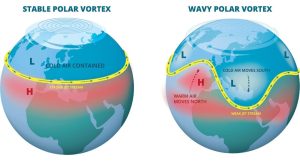
Despite the scientific debate, the political reality is already set. For a population that has endured years of water rationing and agricultural collapse, the sight of greening hillsides in the wake of military escalation is a powerful narrative. It reframes the conflict not just as a battle over borders or ideology, but as a struggle for the very right to a country’s natural resources. The sudden end of the drought has reinforced the belief that the water was being held hostage by technology, making the return of the rain feel less like a weather event and more like a tactical liberation.
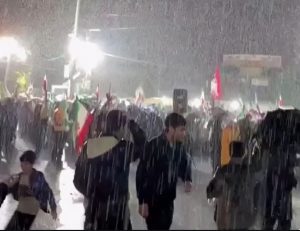
As the rain continues to fall, the international community faces a new and uncomfortable question: if a nation can prove its clouds were diverted by design, should such “atmospheric theft” be prosecuted as a silent invasion? For now, as Iran mops up from the floods, the victory is being celebrated not in the halls of diplomacy, but in the replenishing waters of the earth. The “Climate War,” once a fringe theory, has moved to the center of the regional conversation, forever changing how the Middle East views its skies.
Why Your Support Matters
Support Our MissionFund Justice. Read Free.
VISA●● MCVerveAMEX⌘PayAFRIGO
🔒 100% Secure Payment Gateway