Ceasefires Buckle in Gaza and Lebanon as Israeli Strikes Defy US-Brokered Deals
A US-brokered framework, mounting genocide findings from Israeli human rights groups, and a widening ICJ case expose the gap between diplomacy and the region's military realities.

(Photo: The AWB News)
A
fragile architecture of international ceasefires is buckling under the weight of continued military operations, exposing the vast gap between high-level diplomatic agreements and the bloody realities on the ground in Gaza and Lebanon. Over a single weekend, fresh military incursions and airstrikes have shattered the quiet promised by recent international accords, underscoring the severe military asymmetry of the region and drawing intensifying condemnation from human rights groups—including prominent voices inside Israel itself.
The current round of fighting in Lebanon traces back to March 2, 2026, when Hezbollah struck Israel in retaliation for the killing of Iran’s supreme leader in US-Israeli strikes on February 28—a distinct escalation from the war that ended with the November 2024 ceasefire, and the backdrop against which the June 26 framework agreement was negotiated.
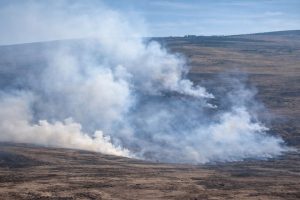
International reactions to Israel’s recent attacks on Lebanon and Gaza have been overwhelmingly critical, with human rights groups, the Lebanese government, and multiple UN bodies condemning the strikes as violations of ceasefire agreements and possible war crimes. In southern Lebanon, a series of confirmed Israeli military operations on July 10 and 11, 2026, has highlighted the extreme fragility of the U.S.-sponsored framework agreement signed on June 26. On Friday, July 10, a series of drone strikes shattered the local calm, targeting a motorcycle in Kfar Roumman and a vehicle in the Nabatieh district, leaving one Lebanese civilian dead and three others injured. The Israeli military said the motorcycle strike targeted a Hezbollah operative near an underground tunnel shaft at the Ali al-Taher Ridge, and that a separate vehicle strike eliminated a suspect it deemed a threat to its soldiers in the area. On the outskirts of Choukine and Kfar Dajjal, a separate strike hit a pickup truck unloading waste, injuring two individuals; the Israeli military did not immediately comment on the strike. Overnight, demolition teams detonated residential structures in the border town of Khiam. The violence spilled into Saturday, July 11, when airstrikes in the Tyre district town of al-Mansouri wounded seven people, drone strikes hit Kfar Tebnit, and controlled home demolitions continued in Houla as fires broke out in Khiam amid heavy machine-gun fire.
Israel maintains its forces are acting in self-defense against remaining elements of Hezbollah who refuse to comply with disarmament and withdrawal terms, though Lebanese officials reject this as a pretext for continued incursions. For Lebanon’s government, these incursions represent clear violations of the diplomatic understanding, with Lebanese officials accusing Israel of actively undermining U.S.-brokered peace efforts. Yet they also expose a stark, uncomfortable political reality. Lebanese President Joseph Aoun pushed heavily for the June agreement as a survival-driven measure of last resort, recognizing that his state does not possess the military means to confront Israel, the invader. The Lebanese Armed Forces are chronically under-equipped, lacking the advanced air defense systems and heavy weaponry necessary to deter a major regional power. By agreeing to a deal that requires the Lebanese Army to deploy to the south and assume a monopoly on security, Beirut has attempted to reclaim its sovereignty and marginalize Hezbollah—the militant group that has long acted as a state-within-a-state, dragging Lebanon into broader regional conflicts without central government consent.
For President Aoun, the choice was a bitter but pragmatic one: surrender to security arrangements that critics call a de facto capitulation—or watch the remaining infrastructure of his economically devastated country be pummeled into total collapse. As he stated when the initial ceasefires took hold, he wanted to ensure Lebanon was “no longer a card in anyone’s pocket, nor an arena for others’ wars.”
Since the Hamas attack on 7 October 2023, Israel has acted in a coordinated and deliberate manner to destroy Palestinian society in the Gaza Strip, committing genocide against its residents.
While Palestine remains highly volatile despite a nominal truce in place since October 2025, Israeli military strikes and gunfire across Gaza on July 12, 2026, killed six Palestinians, including Tala Abu Matar… tent encampment in the Al-Bureij refugee camp in central Gaza. The Israeli military said it was unaware of the incident when asked about the girl’s death. Four of these victims were killed in an airstrike on a metal workshop in Gaza City; the Israeli military confirmed the strike, telling Reuters the site was ‘terrorist infrastructure,’ and later said it had targeted a Hamas weapons production facility. Another victim was killed in a strike on a displacement tent in Khan Younis. On July 13, another wave of airstrikes and gunfire killed at least three Palestinians and wounded fifteen others across Khan Younis and Gaza City, including a strike that hit a displacement tent in the Al-Mawasi area of Khan Younis, a designated humanitarian zone. The Israeli military did not immediately comment on the strike.
These ongoing casualties occur against a backdrop of unprecedented legal and moral isolation for the Israeli government. A growing chorus of international bodies, legal experts, and sovereign states have formally characterized Israel’s military campaign as a genocide. This legal offensive is anchored by South Africa’s landmark case at the International Court of Justice (ICJ), which has garnered formal intervention and backing from countries including Brazil, Ireland, Spain, Mexico, Turkey, Colombia, Egypt, Cuba, Chile, Belgium, and Bolivia. Within the United Nations system, the independent International Commission of Inquiry and multiple independent UN Rapporteurs have all concluded that the threshold of genocidal intent and action has been met.
This assessment is shared by premier global watchdogs. Amnesty International has called for… an immediate, comprehensive arms embargo on Israel to prevent further civilian casualties. This sentiment is shared by Human Rights Watch, alongside academic bodies like the International Association of Genocide Scholars and the Lemkin Institute for Genocide Prevention.
Most striking, however, is the condemnation emerging from within Israel’s own borders. Prominent Israeli human rights organizations, led by B’Tselem and Physicians for Human Rights–Israel, have joined the international community in declaring that the state is actively committing genocide in Gaza. B’Tselem has warned of a catastrophic, looming risk of these policies expanding directly into the West Bank, and has urgently called upon the Israeli public and the international community to mobilize all available diplomatic and international legal tools to bring an immediate, verifiable end to the genocide. By documenting these actions from the inside, domestic Israeli critics have eroded the government’s security-based justifications, leaving the state increasingly isolated even as its military continues to strike targets across both its southern and northern borders.