Nigeria’s Road Network Hits 200,000 Kilometers, But Two-Thirds Remain Unpaved
Federal, state, and local governments split maintenance of Africa's largest road system, as Minister Goronyo warns 35,000 kilometers can't be funded by budget alone

A
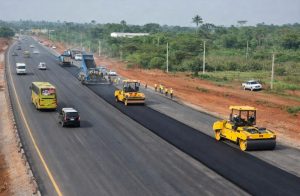
BUJA — Nigeria holds the largest road network in West Africa, totaling roughly 200,000 kilometers of surfaced roads, yet a staggering infrastructure gap persists between paved routes and underdeveloped earth tracks, according to recent institutional data. Out of this vast network, only an estimated 60,000 kilometers are fully paved, leaving roughly 140,000 kilometers of the country’s pathways classified as unpaved, graded earth, or severely underdeveloped. This profound deficit disproportionately impacts rural areas, where community and village access roads remain highly vulnerable to seasonal weather disruptions, inflating logistics costs and stalling regional agricultural trade.
The administrative burden of mapping, tracking, and upgrading this expansive network is structurally split across three tiers of government, a breakdown that complicates unified infrastructure development. Federal roads make up approximately 17 percent of the national total and serve as the main interstate arteries carrying the vast majority of heavy freight traffic. State ministries of works manage roughly 16 percent, connecting towns and cities within individual state borders. The largest share, accounting for nearly 67 percent of the entire network, falls under local government councils tasked with overseeing rural feeder roads, which constitute the bulk of the country’s unpaved surfaces.
To monitor this layered ecosystem, multiple regulatory and ministerial bodies maintain distinct national data banks. The Federal Ministry of Works serves as the primary authority directing the planning, design, and construction of all federal corridors. Operating directly beneath it is the Federal Roads Maintenance Agency, or FERMA, which acts as the specific institutional mechanism handling the rehabilitation and day-to-day management of existing federal highways. Concurrently, the Federal Ministry of Transportation tracks broader national traffic corridors and transit frameworks through its relevant departments, while individual state ministries and local government area councils independently audit the networks inside their geographic boundaries.
About 35,000 kilometres of roads cannot be funded and maintained overnight. We have to look for alternative sources of funding so that we can continue to maintain our physical assets, which are the roads. We have to create new ways of funding and new alternatives.
— MUHAMMAD BELLO GORONYO, MINISTER OF STATE FOR WORKS, FEBRUARY 2025
As public funding faces immense pressure, government officials are increasingly pointing toward alternative financing models to close the multi-billion-dollar deficit. The ongoing disparity between urban paved corridors and neglected local feeder networks has captured the attention of regional economic experts, who warn that infrastructural stagnation undermines broader economic diversification. Economists suggest that while mega-highway projects receive significant political capital, the structural failure to pave local government roads isolates agrarian communities from major markets.
Transportation infrastructure serves as a primary catalyst for economic diversification, offering vital access corridors that stimulate regional commerce and trade. Analysts emphasize that the high proportion of un-tarred and poorly maintained roads across the sub-tiers directly contributes to economic underdevelopment, increased vehicle operating costs, and diminished national productivity. Closing this critical infrastructure gap remains central to unlocking sustainable economic expansion across West Africa’s largest economy.