The Billion-Dollar-A-Day War: Pentagon Internal Data Reveals Massive Cost of Iran Conflict
As Operation Epic Fury enters its second week, the sheer scale of ammunition expenditure and hardware losses is creating a historic fiscal drain.

T
he initial strikes of Operation Epic Fury may have achieved their tactical objectives, but the financial toll is starting to surface in Washington. According to estimates from the Center for Strategic and International Studies (CSIS) circulating on Capitol Hill this week, the United States spent approximately $891 million per day in the opening phase of the conflict — a figure analysts expect to climb significantly as operations intensify.
While the Pentagon has not yet released a formal public audit, officials familiar with the data suggest the burn rate is driven by an unprecedented consumption of high-end precision munitions and the high cost of maintaining a massive naval footprint in the Persian Gulf. In previous decades, “counter-insurgency” wars relied on ground troops and relatively inexpensive hardware. The conflict with Iran is different.

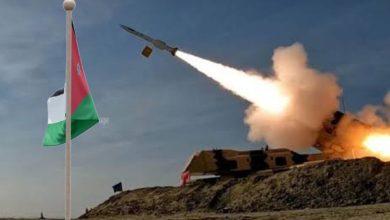
During the opening 48 hours, the U.S. fired over 200 Tomahawk cruise missiles. At roughly $2.5 million apiece for the Block V variant, the bill for those strikes alone cleared $500 million before factoring in fuel or personnel. Unlike the “low-threat” environments of the early 2000s, Iranian air defenses have proven capable. Replacing downed drones and repairing damaged airframes adds an immediate, lumpy spike to the daily average that isn’t seen in peacetime.
Keeping three Carrier Strike Groups on high alert requires a constant “bridge” of mid-air refueling and sea-based logistics. Analysts estimate that simply keeping these assets in a “combat-ready” state costs tens of millions per hour. Defense Secretary Pete Hegseth recently noted that the U.S. is “accelerating” its operations. However, there is a clear effort to transition to more sustainable munitions.
As Iranian radar sites are neutralized, the Air Force is reportedly moving from standoff missiles to JDAM (Joint Direct Attack Munition) kits. These “smart bombs” cost about $30,000 each — a fraction of the price of a Tomahawk — but they require pilots to fly much closer to the target, shifting the risk from the taxpayer’s wallet to the cockpit. The Pentagon is currently preparing a substantial emergency supplemental funding request for Congress, with figures discussed in Washington already running well into the tens of billions.
For lawmakers, the daily burn rate is a sobering metric. While proponents argue that the cost of allowing Iran to block the Strait of Hormuz would be far higher for the global economy, critics are already questioning how long the U.S. can maintain this level of intensity without impacting domestic fiscal stability. As the conflict moves into its next phase, the battle in the briefing rooms of the Pentagon may become just as intense as the one in the skies over Tehran.