Russia Intensifies Odesa Siege as Zelenskyy Presses for Patriots
Ukraine's leader seeks emergency air defense as political turmoil, a slowing front line, and intensified Odesa strikes converge

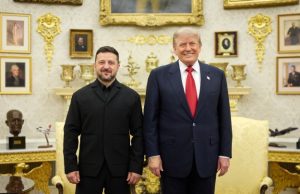
Ukrainian President Volodymyr Zelenskyy has launched a dual-track diplomatic and political offensive, pressing U.S. President Donald Trump for an emergency “winter package” of 300 Patriot air defense interceptor missiles while simultaneously struggling to contain his most severe domestic political crisis since the start of the full-scale Russian invasion.
The high-stakes request for 300 Patriot interceptor missiles—an operational figure first outlined during the mid-July Coalition of the Willing summit in France and reiterated directly to Trump in Washington—comes as Kyiv scrambles to reinforce its severely depleted air defense stockpiles against anticipated Russian ballistic missile and drone strikes targeting energy infrastructure ahead of the cold season. In meetings with Trump, Zelenskyy proposed an unprecedented defense exchange, offering to share battle-tested Ukrainian military technology and field expertise in return for immediate missile deliveries. Ukrainian defense officials are also exploring options to co-develop or modify domestic ballistic missiles into interceptor systems capable of supplementing Western platforms faster and at lower cost.
We need the Patriots yesterday.
— VOLODYMYR ZELENSKYY
While Trump agreed during discussions to advance negotiations on granting Ukraine licenses to produce Patriot interceptors locally, the transition offers little immediate comfort to Kyiv. Industrial estimates indicate establishing domestic manufacturing lines will take between one and five years, a timeline Zelenskyy warned falls far short of immediate operational requirements. After visiting the White House, Zelenskyy met with representatives from defense giants Lockheed Martin and RTX Corp (formerly Raytheon) to discuss production. Trump expressed willingness to support the initiative but cautioned that competing global demands continue to tightly strain American interceptor stockpiles.
Beyond immediate interceptor requests, Ukraine remains heavily reliant on broader Western financial and industrial frameworks to maintain its defense budget and domestic industrial base. European partners, alongside non-EU allies such as the United Kingdom, are currently executing multi-billion-dollar framework loans to guarantee predictable, long-term military procurement. Concurrent diplomatic talks among allied nations are increasingly focused on formalizing long-term security guarantees and co-production agreements designed to shift Ukraine from direct equipment reliance toward self-sustaining defense manufacturing.
The diplomatic push in Washington unfolds against a backdrop of deep political instability in Kyiv following a wider government reboot. Zelenskyy is facing unprecedented public friction following the dismissal of popular 35-year-old Defense Minister Mykhailo Fedorov, a prominent tech reformer credited with modernizing Ukraine’s drone warfare and procurement systems. The move sparked street protests in Kyiv and other major cities, with veterans and civil society groups demanding Fedorov’s reinstatement.
In an effort to defuse mounting public anger and address institutional gridlock, Zelenskyy subsequently removed Armed Forces Commander-in-Chief General Oleksandr Syrskyi and appointed Major-General Mykhailo Drapatyi, a respected 43-year-old tactical commander closely aligned with technological innovation and military modernization, to lead the armed forces.
Compounding the pressure on Kyiv, Russian ground forces have continued grinding, incremental advances along the roughly 1,200-kilometer front, though military analysts note the pace has slowed sharply compared to 2024 and 2025 amid effective Ukrainian counterattacks. Meanwhile, Russia has intensified strikes on Odesa and its Black Sea ports, repeatedly targeting commercial vessels alongside port infrastructure; regional officials reported dozens of deaths and well over a hundred vessels struck in July alone, including a deadly attack on a grain ship that killed ten crew members.
The convergence of a grinding front line, an intensifying maritime campaign against Odesa, and unprecedented leadership upheaval highlights the delicate balancing act currently facing Ukraine: maintaining internal political cohesion and civil society trust while navigating international negotiations over security guarantees, military procurement, and potential ceasefire frameworks pushed by Washington.