US-Iran Ceasefire Collapses as Strikes Rock Persian Gulf, NATO Summit
Trump declares 14-point MoU dead after Iranian tanker attacks trigger US airstrikes and regional retaliation, sending oil prices surging amid NATO tensions in Ankara.

ANKARA — The fragile diplomatic facade between Washington and Tehran collapsed entirely on Wednesday as an unravelling ceasefire gave way to direct military exchanges in the Persian Gulf and a bitter war of words at the NATO summit in Turkey. Less than three weeks after the United States and Iran signed a highly touted 14-point Memorandum of Understanding (MoU) on June 17, 2026, a rapid succession of maritime strikes, heavy U.S. aerial bombardment, and regional counter-attacks have officially pushed the two nations back to the brink of an all-out war.
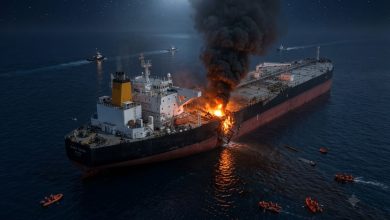
The truce shattered early Tuesday when Iran launched targeted missile and drone strikes against commercial vessels navigating the crucial Strait of Hormuz. The assault heavily damaged a Qatari liquefied natural gas tanker, the *Al Rekayyat*, along with a Saudi Arabian oil tanker, instantly freezing regional shipping lanes. Tehran aggressively defended the operation, claiming the United States had already committed a fatal breach of the MoU by maintaining core economic restrictions and failing to properly lift oil sanctions. Characterizing its actions as a direct response to Western bad faith regarding promised economic relief, Iran asserted it was enforcing its sovereign rights within the maritime corridor.
Washington rejected that narrative, countering that Iran’s targeting of civilian commercial traffic directly violated core MoU provisions guaranteeing freedom of navigation and the immediate reopening of the Strait. In immediate retaliation, the Trump administration revoked the general license that had briefly authorized Iranian oil sales. Simultaneously, U.S. Central Command executed a massive wave of airstrikes, pounding more than 80 military targets inside Iran, focusing heavily on coastal radar facilities, air defense batteries, and drone launch facilities in the Hormozgan and Mahshahr provinces.
Rather than forcing a pause, the American bombardment triggered an immediate escalation. Within hours, Iran’s Islamic Revolutionary Guard Corps unleashed a massive counter-attack, launching waves of ballistic missiles and suicide drones directly at American military installations in Kuwait and Bahrain, the latter of which hosts the U.S. Navy’s Fifth Fleet. While the Kuwaiti military confirmed its air defense systems successfully intercepted a significant portion of the incoming salvo, air raid sirens across the Gulf sent residents rushing to shelters. Iran’s top military command, Khatam al-Anbiya Central Headquarters, warned that any “point of origin of support” provided to U.S. forces would be considered a “legitimate target” for Iranian forces.
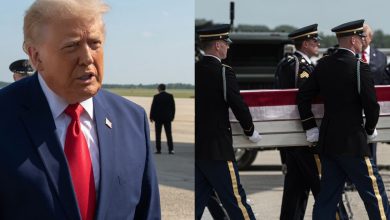
Speaking from the high-stakes NATO summit in Ankara, U.S. President Donald Trump delivered a blunt post-mortem on the diplomatic track, explicitly declaring the ceasefire finished and the agreement dead.
They’re scum. They’re sick people. They’re led by sick people, and they’re vicious, violent people. And if they had a nuclear weapon, they’d use it.
Trump expressed deep personal frustration with the breakdown, alleging that Iranian officials routinely backtracked on verbal agreements regarding their nuclear program. “Everyone’s agreed, no nuclear weapon. We make a deal,” Trump said. “They go outside, joke to the press, they say we never even talked about it. There’s something wrong with them, they’re cuckoo.” He also voiced anger over the strategic timing of the flare-up, pointing out that Washington had deliberately paused military action out of respect for the mourning period following the killing of Iran’s former Supreme Leader, Ayatollah Ali Khamenei. “We said, go and do your funeral stuff,” he said. “And instead of that, they started shooting rockets at ships yesterday.”
The American military response found immediate, unwavering support from NATO leadership. Appearing alongside Trump in Ankara, NATO Secretary General Mark Rutte defended the overnight bombardment of Iranian coastal targets as “absolutely necessary” and “totally crucial” for international stability. “When you have a ceasefire and Iran is basically violating the ceasefire, I think it is totally crucial that the US forcefully react,” Rutte stated. The Secretary General emphasized that the strikes successfully degraded Iranian missile and nuclear capabilities, which he described as an essential shield for the security of Europe, Israel, and the wider Middle East. Analysts noted that Rutte’s firm public stance was highly strategic, designed to soothe an openly furious Trump, who had spent the morning berating European allies—even ordering a halt to trade with Spain, reigniting a dispute over Madrid’s refusal to meet NATO’s new 5% GDP defense-spending target — compounded by Spain’s earlier refusal to let U.S. forces use its Rota and Morón bases for the Iran campaign.
Yet, as political leaders traded barbs in Ankara, global energy markets reeled from the fallout, with crude oil prices surging over 5 percent within hours of Trump’s comments. The market’s panic reflects a growing realization that the 60-day diplomatic window was never built on a foundation of genuine mutual trust, but rather on competing, deeply cynical calculations of *realpolitik*.
That transactional undercurrent was laid bare just days ago by Vice President JD Vance during a candid interview. Vance openly admitted that the temporary framework was partially a tactical maneuver, stating on The Michael Knowles Show that “the president has told us to use this MoU to sort of refill the world’s oil economy, to refill some stocks, and then to see where the hand is.” Vance’s framing suggested Washington viewed the 60-day period as a chance to rearm and reassess leverage. While defenders of the administration view Vance’s strategy as necessary leverage-driven diplomacy, critics argue it sent a massive red flag to Tehran, confirming Iranian hardliners’ suspicions that the U.S. was merely using the truce as a tactical pause to prepare for a later conflict.
The ultimate fragility of the MoU is rooted in a fundamental, structural ambiguity within the text itself. The agreement dictated that Iran use its “best endeavors” to restore shipping traffic to pre-war norms within a month. While Washington interpreted this as a mandate for immediate open transit, Tehran viewed it as a 30-day window of exclusive administrative and security control over the Strait, during which they even attempted to levy “security fees” on foreign vessels—a move the U.S. swiftly condemned as an illegal protection racket. Neighboring Gulf states, including the United Arab Emirates and Qatar, have largely rejected Iran’s legal defense, with regional diplomats noting that the attacks on neutral civilian tankers demonstrate a fundamental inability by Tehran to adhere to the basic mechanics of international de-escalation.
The crisis has now moved far beyond the control of diplomats and trade lawyers, morphing into a highly volatile, populist confrontation. At the ongoing state funeral for Ayatollah Khamenei, hundreds of thousands of mourners flooded the streets of Tehran and Qom, with state media touting plans to mobilize millions more across the week-long mourning period. As the public procession transits through sacred regional waypoints including Najaf and Karbala, the mass mobilization has been defined by an overwhelming, state-sanctioned demand for blood-revenge, symbolized by the raising of ceremonial red flags. The intense ideological fury in the streets has effectively backed the Iranian government into a geopolitical corner. Demonstrators were documented shouting “death to the compromiser” at their own relatively moderate president, Masoud Pezeshkian, signaling that any further attempt by Tehran to salvage the MoU before tomorrow’s final burial at the Imam Reza shrine in Mashhad would face severe domestic blowback.
With the diplomatic guardrails completely erased, the region faces the immediate threat of a multi-front war. Lacking the conventional military hardware to match the United States directly, Iran’s strategic doctrine relies heavily on activating its “Axis of Resistance” proxy networks across Iraq, Syria, Lebanon, and Yemen. If the immense public pressure for revenge translates into sustained asymmetric strikes against Western assets, the conflict is poised to rapidly draw in Israel, neighboring Arab states, and potentially broader NATO forces, turning a failed ceasefire into a catastrophic regional conflagration.
Living Faith
Crusade 2026
Experience Three Powerful Days of Faith, Worship, and God's Word

📅 Date
September 24–26, 2026
📍 Venue
Rhema USA Campus, Broken Arrow, Oklahoma, USA