Strait of Hormuz Stays Closed as Iran Rejects Oman’s Plan
Iran rejects Oman's 50-50 Hormuz plan and intercepts three tankers as a collapsed ceasefire and a new three-lane proposal reshape the standoff.


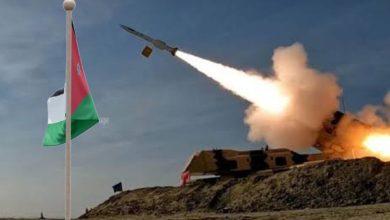
The Strait of Hormuz remains fully closed to commercial shipping, with reopening now contingent on Iran and Oman reaching an agreement neither side appears close to signing. The diplomatic deadlock has hardened just as the wider U.S.-Iran conflict re-escalated: hours after Tehran’s Deputy Foreign Minister Kazem Gharibabadi rejected Muscat’s latest proposal for shared oversight of the waterway, Islamic Revolutionary Guard Corps missiles struck U.S. positions in Jordan, collapsing the fragile ceasefire that had briefly paused hostilities. The convergence of a stalled maritime settlement and a shattered truce leaves one of the world’s most critical energy corridors closed with no clear timeline for reopening.
Diplomatic Deadlock Deepens
Under a mediation initiative led by Muscat, Oman proposed a 50-50 navigation arrangement modeled on the Strait of Malacca’s cooperative framework, under which shipping lanes and security responsibilities would be divided evenly between the two countries bordering the strait. Gharibabadi told Iranian state television on Tuesday that Tehran had rejected the formula outright, arguing it failed to address Iran’s national security concerns.
Our proposal is that one shipping lane through the strait must be entirely under Iran’s control, with part of the other lane also under Iranian control.
— KAZEM GHARIBABADI, IRANIAN DEPUTY FOREIGN MINISTER
Gharibabadi separately warned that Hormuz “will never return to its pre-war arrangements,” calling it a definitive state policy rather than a negotiating position. A senior Iranian official separately told Reuters the 50-50 framework “has no chance of success,” insisting only Iran and Oman are entitled to determine the strait’s governance based on their respective territorial shares — explicitly ruling out a role for other regional states in any final arrangement.
A Third Option Emerges
With the binary 50-50 framework stalled, Oman is now reportedly weighing a revised, three-lane structure: one route through Iranian territorial waters, a second designated as an international lane, and a third running through Omani waters. Al Jazeera reported Tehran has shown “some flexibility” toward the emerging structure, though it remains unclear whether Iran will formally accept it. Iranian Foreign Minister Abbas Araghchi held separate calls with his Omani and Saudi counterparts this week on “regional developments” and efforts to stabilize the strait, while U.S. President Donald Trump said Tuesday that Washington was holding “good talks” with Tehran with a real chance of an agreement.
Oman also proposed allowing a third country to carry out mine-clearing operations in the strait’s southern section — a suggestion Tehran likewise rejected, with Gharibabadi warning that any European warship approaching the strait would be treated as a legitimate military target. A senior Iranian source told Reuters that Tehran had not yet formally responded to Oman’s proposal in writing as of Tuesday, suggesting Gharibabadi’s public rejection may function as a negotiating posture rather than a final position — though the gap between Iran’s public demands and what Gulf states say they can accept remains wide.
Tankers Seized, Traffic Collapses
The stalemate is no longer theoretical. Iran has intercepted three tankers in the strait this week alone, and daily shipping traffic remains well below its pre-war average of roughly 100 vessels. Before the conflict, the strait handled close to a fifth of the world’s daily oil and liquefied natural gas exports; that baseline no longer describes current conditions, with reopening now dependent entirely on the outcome of the Iran-Oman talks.
Stakes for the Global Economy
Commercial fleets rerouting around Africa’s Cape of Good Hope face voyages extended by up to two weeks between Europe and Asia, driving up bunker fuel costs, tying up vessel capacity, and pushing war-risk insurance premiums on Gulf-transiting tankers sharply higher. That pressure is already visible in energy markets: Brent crude rose roughly 4% following the Jordan strike, reversing an earlier dip and pushing prices back toward the high $80s. A prolonged closure — now compounded by a fully collapsed ceasefire rather than a paused conflict — raises the likelihood of sustained supply deficits and renewed inflationary pressure on fuel, food, and shipped goods worldwide.