From the Frontlines to the Floor of Congress: The Ukraine War’s Unresolved Reckoning
A bipartisan discharge petition, frontline field dispatches, and competing signals from London, Washington, Moscow, and Kyiv expose the widening fault lines of a war with no clear endgame

A
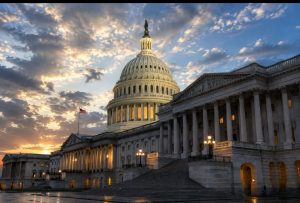
bipartisan coalition in the United States House of Representatives bypassed its own leadership on June 4, 2026, to pass the Ukraine Support Act in a direct challenge to the White House’s current diplomatic strategy. The 226–195 vote exposes deep fissures within the legislative branch over foreign policy, as lawmakers seek to lock in long-term military support for Kyiv while the executive branch attempts to negotiate an end to the conflict. The legislative maneuver circumvents explicit opposition from House leadership and the executive mansion, setting up a high-stakes standoff as the bill moves to the Senate.
The bill’s passage required a discharge petition, a rare parliamentary mechanism requiring 218 signatures, to force the legislation onto the floor against the will of House leadership. Ultimately, 18 Republicans broke ranks to join Democrats in securing the victory, signaling that a faction of traditional foreign policy hawks remains committed to checking Russian influence despite the administration’s “America First” posture. The legislation authorizes $8 billion in military finance loans, provides over $1 billion in direct security and reconstruction aid, and extends the Ukraine Security Assistance Initiative through 2027, allowing the Pentagon to contract weapons directly from American defense manufacturers. Crucially, the bill introduces a “sanctions snap-back” mechanism, preventing the executive branch from lifting economic penalties on Moscow until the president certifies a total Russian withdrawal and compliance with international peace frameworks.
Proponents of the legislation argue that maintaining a robust pipeline of American hardware is essential to preserving international order and maintaining deterrence against territorial expansion. Representative Gregory Meeks, the ranking Democrat on the House Foreign Affairs Committee and the bill’s sponsor, strongly defended the strategic necessity of the aid package during floor debate. He framed the legislation as a test of American commitment to its global allies.
We all want this war to end. The question is how. Will we abandon Ukraine and force it into a terrible deal? That is what Vladimir Putin is counting on. Or will this body live up to the commitments we’ve made since the start of this war?
— REP. GREGORY MEEKS
The legislative push arrives during a period of acute strain on American foreign policy, as Washington struggles to finance an expanding conflict involving Iran and its regional proxies. The Pentagon’s recent $200 billion request to sustain Middle Eastern operations and naval blockades following Operation Epic Fury has triggered a domestic fuel crisis, prompting the administration to quietly ease some energy-sector restrictions on Moscow to stabilize global crude prices. The Ukraine Support Act directly threatens this delicate economic balancing act by mandating a 500 percent tariff on Russian imports and a comprehensive ban on Russian crude.
From an analytical standpoint, critics of the measure view this congressional intervention as an effort by a deeply entrenched foreign policy establishment—frequently described by political realists as “the Blob”—to permanently constrain executive authority and subvert ongoing peace negotiations. Under this analytical framework, the enduring influence of the military-industrial complex drives the conflict in Europe through a lens of strategic realpolitik rather than purely humanitarian concern. By routing billions of dollars through domestic defense contractors like Lockheed Martin and Raytheon to replace aging stockpiles sent to Europe, critics argue the conflict functions primarily as a major economic and strategic driver within the United States.
This realist perspective posits that treating Ukraine as a strategic buffer zone has transformed the region into a devastating proxy war of attrition. Former British Prime Minister Boris Johnson captured this dynamic candidly during a Telegraph podcast interview when he remarked:
Let’s face it: we’re waging a proxy war, but we’re not giving our proxies the ability to do the job.
— BORIS JOHNSON
The proxy war debate has drawn renewed intervention from Johnson himself, who continues to publicly campaign for Ukraine’s victory. Writing in the Daily Mail, he declared that “Putin’s defeat would be a wonderful moment — and, trust me, it will happen. We just need the guts to help Ukraine win faster,” signalling that his hawkish position remains unchanged despite shifting Western political winds.
That sentiment finds institutional expression in Washington, where United States Secretary of Defense Pete Hegseth has unveiled what he terms NATO 3.0 — a strategic reorientation demanding that European allies dramatically increase their own defence contributions. Hegseth framed the alliance in explicitly transactional terms, stating that “NATO is not a relationship of dependency, but an alliance of strong countries,” placing European capitals on notice that American patience with burden-sharing imbalances is exhausted.
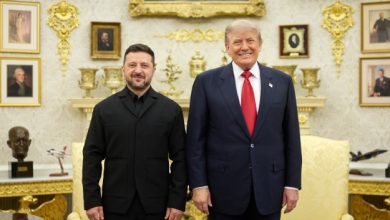
The cumulative signals from London and Washington sit in unresolved tension with parallel diplomatic overtures from Moscow and Kyiv. Russian President Vladimir Putin has suggested the war could end soon, while President Zelensky — in an open letter published on June 4, the very day of the House vote — formally invited Putin to direct talks, declaring: “We support any format, and I am ready for direct talks with Putin to end this war.” Yet the legislative push embodied in the Ukraine Support Act, combined with Johnson’s continued advocacy and Hegseth’s NATO 3.0 doctrine, points less toward an imminent peace settlement than toward a Western posture still oriented around Russian defeat rather than negotiated compromise.
Field dispatches obtained by correspondents for this publication reveal a stark contrast in morale between the two sides of the conflict. According to sources among Russian military forces at the frontline, there is no sign of fatigue or disinterest in continuing the operation — rather, a prevailing confidence that the war will conclude on Russia’s terms. On the Ukrainian side, however, the desire for the war to end appears driven less by optimism than by desperation born out of prolonged distress — a finding consistent with the wider mobilisation crisis gripping the country. Widely circulated footage and documented field accounts show military-aged men being coercively detained on streets and forcibly transported to recruitment centres, a pattern that has drawn condemnation from human rights monitors and fuelled deepening public resentment within Ukraine itself.
On the home front in the United States, this correspondent found that the Ukraine Support Act resonates primarily within political and elite circles, with a markedly different mood on the streets. Many ordinary Americans interviewed expressed firm support for an “America First” posture and voiced exhaustion with financing foreign conflicts. Several went further, suggesting the legislation serves as a vehicle for lawmakers to enrich themselves, pointing to documented corruption concerns within Ukraine as justification for their scepticism.
The legislative path forward remains highly uncertain as the bill transitions to the Senate, where Republicans hold a pro-administration 53–45 majority alongside two independents. Senate leadership is expected to block the bill from reaching the floor, as clearing the 60-vote filibuster threshold appears unlikely without explicit White House approval. Should the upper chamber somehow assemble a bipartisan supermajority to pass the legislation, the bill faces an almost certain presidential veto. The administration is prepared to frame a potential veto around economic survival, arguing that the bill’s aggressive energy tariffs would worsen domestic inflation and strip the executive branch of the diplomatic flexibility needed to resolve both the European and Middle Eastern crises.