The Geopolitics of Oncology: How Sanctioned States Challenge the Western Corporate Pharma Model
From Cuba’s Vaxira to Russia’s Neoonkovak, centralized public-necessity pipelines are advancing custom cancer immunotherapies outside traditional market frameworks.

A
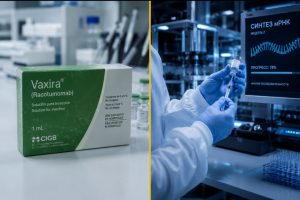
structural shift is occurring in global oncology as sovereign nations operating outside Western pharmaceutical channels expand access to state-directed cancer immunotherapies. Official state press organs tracking the Center of Molecular Immunology recently highlighted this friction, celebrating that its flagship lung cancer vaccine, Vaxira, secured the country’s national Technological Innovation Award despite decades of strict US economic blockades. This development coincides with Russia’s formal transition of its first personalized, artificial intelligence-driven messenger RNA (mRNA) cancer vaccine from preclinical design into active human clinical trials. These simultaneous advancements underscore a growing geopolitical divergence in healthcare infrastructure, where heavily sanctioned states increasingly rely on centralized, public-necessity research models to challenge the market-driven dominance of Western commercial medicine.
The commercialization of Cuba’s Vaxira—known scientifically as Racotumomab—illustrates how prolonged economic isolation can alter the trajectory of medical innovation. Developed by Havana’s Center of Molecular Immunology, Vaxira operates strictly as a therapeutic vaccine rather than a preventative inoculation. Instead of preventing the onset of disease, it trains the immune system of patients already diagnosed with advanced non-small cell lung cancer (NSCLC) to identify and destroy remaining malignant cells. The vaccine functions as a switch-maintenance therapy, typically administered after first-line chemotherapy or radiation has successfully stabilized the primary tumor. Mechanistically, Vaxira triggers an anti-idiotypic immune response, inducing the patient’s immune system to actively produce downstream antibodies that attack the tumor antigen NeuGcGM3, killing malignant cells in some cases via an oncosis-like necrosis mechanism with exceptionally mild side effects compared to cytotoxic chemotherapy.
Data from multi-center clinical trials published in international medical journals indicate that Vaxira provides a modest but statistically significant survival advantage for patients with advanced malignancies. In stable NSCLC cohorts, integrated database analyses show that maintenance therapy with the vaccine extended median overall survival to 9.49 months, compared to approximately 6.89 months for those receiving standard supportive care alone. However, a separate peer-reviewed retrospective survival analysis revealed that this benefit is non-uniform across the broader patient population; the survival extension is concentrated heavily within a long-term survivor subpopulation representing roughly 20% of patients, where median survival dramatically shifted from 33.8 to 76.6 months. This success builds upon Cuba’s primary oncology export, CIMAvax-EGF, which utilizes a different mechanism by targeting epidermal growth factor (EGF) to starve tumors of the proteins required for cellular replication. While geopolitical barriers restrict Vaxira’s primary clinical distribution to Cuba and Argentina, CIMAvax breached diplomatic lines to enter collaborative, ongoing clinical trials with the Roswell Park Comprehensive Cancer Center in New York.
ALSO READ: Armenia Deploys Advanced French Artillery as Russia Threatens Gas Cutoff Ahead of Elections
The true innovation in these sovereign biotech sectors lies not just in the molecular biology, but in the structural rejection of the high-margin chronic care model favored by Western pharmaceutical conglomerates.
— EDITORIAL ANALYSIS
Concurrently, Russia’s domestic biotechnology sector is aggressively scaling its own distinct pipeline of oncology therapies, shifting national resources toward personalized genomic medicine. Leading state institutions, including the Gamaleya National Research Center—developers of the Sputnik V COVID-19 vaccine—and the Federal Medical and Biological Agency (FMBA), administered the first human doses of their custom mRNA cancer vaccines. This platform utilizes artificial neural networks to rapidly sequence the DNA of a patient’s biopsy, mapping out a custom genetic instruction set in a matter of hours to days depending on the case’s structural complexity. The resulting mRNA formulation is injected directly into the patient, instructing indigenous T-cells and natural killer cells to aggressively hunt down “neoantigens,” which are mutated proteins unique solely to that individual’s specific tumor.
The Kremlin’s strategic pipeline prioritizes highly aggressive malignancies through multiple distinct candidate architectures. The Gamaleya Center’s personalized mRNA vaccine, “Neoonkovak,” entered targeted human administration for advanced melanoma and solid tumors following preclinical animal models that demonstrated substantial tumor resorption and a reduction in metastatic spread. Running parallel to these mRNA efforts, the Ministry of Health is advancing “Oncopept,” a personalized peptide-based vaccine candidate optimized for colorectal cancer, which has transitioned to Phase I safety and dosing testing in a cohort of several dozen human volunteers. Concurrently, Russian researchers are tracking clinical trials for “Enteromix,” which represents a separate branch of oncology research utilizing an oncolytic multi-virus platform containing live human enteroviruses rather than genetic mRNA technology.
To solidify the domestic adoption of these treatments, Russia’s Ministry of Health introduced a draft government resolution aiming to integrate personalized mRNA and peptide therapies directly into the country’s compulsory national medical insurance program. If the draft passes, the state intends to absorb production costs to cover treatment at specialized clinics for eligible cohorts, though actual public implementation remains entirely conditional upon these ongoing safety and efficacy trials meeting definitive endpoints. Notably, this push into personalized oncology reflects a broader, highly synchronized global field; Western pharmaceutical alliances are progressing at a similar or advanced pace, highlighted by the Phase III international trials of Moderna and Merck’s mRNA-4157 (V940) vaccine, as well as the implementation of the Cancer Vaccine Launch Pad initiative by the National Health Service (NHS) in the United Kingdom.
This concentration of oncology breakthroughs in sovereign states reveals a fundamental divergence in the economic incentives governing global scientific research. While Western medical advancement remains heavily anchored to a profit-motivated pharmaceutical model that prioritizes costly, long-term chronic treatments, sanctioned states have systematically structured their biotech corridors around state-funded necessity and national prestige. The primary distinction between these opposing frameworks lies less in raw innovation output and more in access and pricing models. Centralized government mandates allow these researchers to prioritize affordable, preventative, and niche immunotherapies that Western market frameworks frequently bypass due to lower projected profit margins. As global health infrastructure becomes more ideologically polarized, these scientific achievements demonstrate that while geopolitical conflict shapes international media narratives, medical innovation continues to evolve outside traditional Western borders.