The United Nations Faces Mid-August Collapse as Top Donors Freeze Crucial Funding
A Kafkaesque accounting loophole joins severe arrears from the US and China to push the global body into structural insolvency.

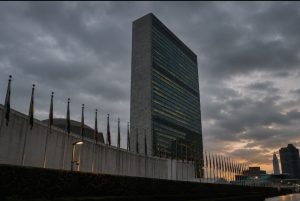
Geopolitical liquidity squeezes are pushing the United Nations toward an imminent structural shutdown by mid-August as a coordinated withholding of mandatory dues by the United States and China drains the global body’s remaining cash reserves. This unprecedented insolvency risk, confirmed by internal financial assessments from the General Assembly’s Fifth Committee, threatens to freeze international diplomacy and permanently dismantle frontline humanitarian operations in active conflict zones.
The financial gridlock marks a fundamental transition from a temporary cash-flow challenge into a permanent, politically driven death spiral. Total outstanding arrears to the UN’s core operating budget have reached historic highs, with the United States operating as the primary driver of the shortfall. Washington currently owes over $4.2 billion in combined regular and peacekeeping obligations, a figure that accounts for approximately 95% of all active, outstanding debt to the regular budget.
This fiscal contraction stems directly from a calculated shift under the Trump administration, which has utilized legislative rescissions to restrict foreign spending and initiated withdrawals from bodies like the World Health Organization and UNESCO. Public legislative actions and statements reveal that Washington is leveraging the withholding to enforce sweeping budget discipline, aligning with broader executive efforts to target what it terms wasteful or inefficient multilateral spending. To resolve the impasse, the UN Secretariat has moved forward with contingency plans to absorb the deficit, including a projected 15% reduction in administrative expenditures and a managed restructuring of field operations.
While the United States deploys overt funding freezes to mandate institutional reform, foreign policy analysts assess that China is executing a subtle fiscal strategy designed to maximize institutional leverage. Beijing, which is assessed for 20% of the UN regular budget, has avoided formal programmatic exits, instead delaying its massive transfers until the final weeks of the fiscal calendar. Senior UN administrators allege that this late-payment pattern systematically starves the Secretariat of operational capital during peak spring and summer cycles, forcing the global body to remain highly risk-averse on sensitive geopolitical portfolios, even as the General Assembly approves a $3.45 billion regular budget.
We are trapped in a Kafkaesque cycle, expected to give back cash that does not exist.
ALSO READ: The Geopolitics of Oncology: How Sanctioned States Challenge the Western Corporate Pharma Model
The persistent cash shortage has activated a bureaucratic flaw within the UN’s accounting architecture, accelerating the descent toward bankruptcy. Under long-standing General Assembly regulations, any budgetary allocations left unspent by December 31 because of a lack of physical cash must be credited back to member states. Because the US and China withhold their payments, hundreds of stabilization projects go unfinished, legally forcing the UN to issue millions of dollars in budget credits back to its largest debtors.
In sharp contrast to the world’s two largest economies, the Russian Federation has maintained prompt fiscal compliance with its baseline assessments, though it faces separate scrutiny over the transparency of its wider international financial flows. UN Secretariat ledgers show that Moscow transferred its regular budget assessment in full ahead of seasonal deadlines, alongside its required share of the separate $5.38 billion global peacekeeping budget. However, compliance from secondary powers cannot bridge the structural deficit left by the US and China, who collectively dictate 42% of core UN financing.
The real-world consequences of this fiscal paralysis are unfolding rapidly, most visibly across the Middle East amid intense public scrutiny over military actions and civilian casualties. The UN Relief and Works Agency (UNRWA), which provides food security, healthcare, and education to over two million Palestinians, faces complete operational insolvency if core cash pools are depleted. Independent monitors warn that an UNRWA collapse would instantly freeze remaining logistical channels into Gaza, eliminating the primary source of verified, neutral data regarding civilian casualties and infrastructure strikes.
The crisis simultaneously undermines international legal and security frameworks designed to arbitrate state-level violence. The International Court of Justice, currently reviewing the high-profile genocide case brought by South Africa against Israel, relies directly on the regular UN budget for its administrative operations; a total cash shutdown would effectively freeze proceedings at the world’s highest court. Concurrently, the UN Interim Force in Lebanon (UNIFIL), which deploys approximately 7,500 peacekeepers along the volatile Blue Line border, is scaling back operations due to severe cash constraints, removing the final neutral buffer between regional combatants.
The systemic hollowing out of the organization extends far beyond the Mediterranean basin. The UN has already initiated the elimination of approximately 2,900 administrative positions worldwide and is preparing for the forced, partial repatriation of uniformed personnel from active stabilization missions in South Sudan and the Democratic Republic of the Congo. Senior diplomats warn that if the current funding blockade persists past mid-August, the international community will lose the fundamental infrastructure required to monitor ceasefires and manage refugee camps, replacing collective diplomacy with an absolute vacuum of global accountability.
This video analysis details UN Chief António Guterres’ warnings regarding global financial gaps, rising geopolitical tensions, and the deep structural strain facing international development and stability mechanisms: UN Chief Addresses Global Financial Failure.
Living Faith
Crusade 2026
Experience Three Powerful Days of Faith, Worship, and God's Word

📅 Date
September 24–26, 2026
📍 Venue
Rhema USA Campus, Broken Arrow, Oklahoma, USA