Beijing Defies Washington: China Issues Historic “Blocking Order” Over Iranian Oil Sanctions
Ministry of Commerce invokes domestic law to shield independent refineries from U.S. financial blockades, marking a new era of geopolitical resistance.

B
EIJING – In a direct challenge to Washington’s financial reach, the Chinese government has issued a formal “blocking order” against United States sanctions. This decree, as reported by Xinhua News, legally prohibits domestic firms from complying with American restrictions on the purchase of Iranian crude oil.
The move, announced Saturday by the Ministry of Commerce in Beijing, marks a significant escalation in the ongoing struggle over “long-arm jurisdiction.” According to analysis from ANI News, it threatens to further fracture the global energy market by creating a legal firewall between Chinese enterprises and Western financial regulations.
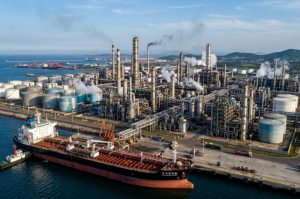
The directive specifically shields five major petrochemical entities: Hengli Petrochemical, Shandong Jincheng, Hebei Xinhai, Shouguang Luqing, and Shandong Shengxing. These facilities, as highlighted by WANA News Agency, have become the primary destination for Iranian exports as Tehran seeks to bypass Western financial blockades.
The United States recently ramped up pressure on these entities, placing them on the Specially Designated Nationals (SDN) list. Washington’s rationale, detailed in recent Treasury Department alerts, remains rooted in its “Maximum Pressure” campaign designed to starve the Iranian government of hard currency required for its strategic programs.
China maintains normal trade cooperation with Iran within the framework of international law, which is both legitimate and legal. We do not recognize unilateral sanctions.
— MINISTRY OF COMMERCE (MOFCOM) SPOKESPERSON
U.S. officials argue that this revenue is used to fund nuclear programs and regional proxy groups. Treasury officials maintain that the unfettered flow of oil to Chinese ports provides a critical lifeline to Tehran, undermining international efforts to curb its military ambitions.
ALSO READ: China Opens Its Market to Africa in Landmark Zero-Tariff Deal as First Shipment Arrives at Shenzhen Port
“We will continue to utilize all available tools to disrupt the illicit financing of the Iranian regime,” a U.S. State Department spokesperson stated earlier this week. The statement emphasized that any entity facilitating these transactions risks total exclusion from the U.S. financial system.
Beijing’s response signals a refusal to accept the dollar’s dominance as a tool of foreign policy. As noted by Business Today, the government maintains that trade relations with Tehran are conducted under sovereign rights that supersede foreign domestic laws.
“We do not recognize unilateral sanctions that lack the mandate of the United Nations Security Council,” the spokesperson continued. Beijing has vowed to take all necessary measures to safeguard the rights of Chinese enterprises and will not comply with dictates that infringe upon national sovereignty.
This legal defiance leverages China’s 2021 Anti-Foreign Sanctions Law, which allows domestic courts to punish companies that implement foreign sanctions. As the standoff deepens, it highlights a shifting global reality where the effectiveness of U.S. economic mandates is being openly challenged by a bloc of nations determined to build an independent financial architecture.
Living Faith
Crusade 2026
Experience Three Powerful Days of Faith, Worship, and God's Word

📅 Date
September 24–26, 2026
📍 Venue
Rhema USA Campus, Broken Arrow, Oklahoma, USA